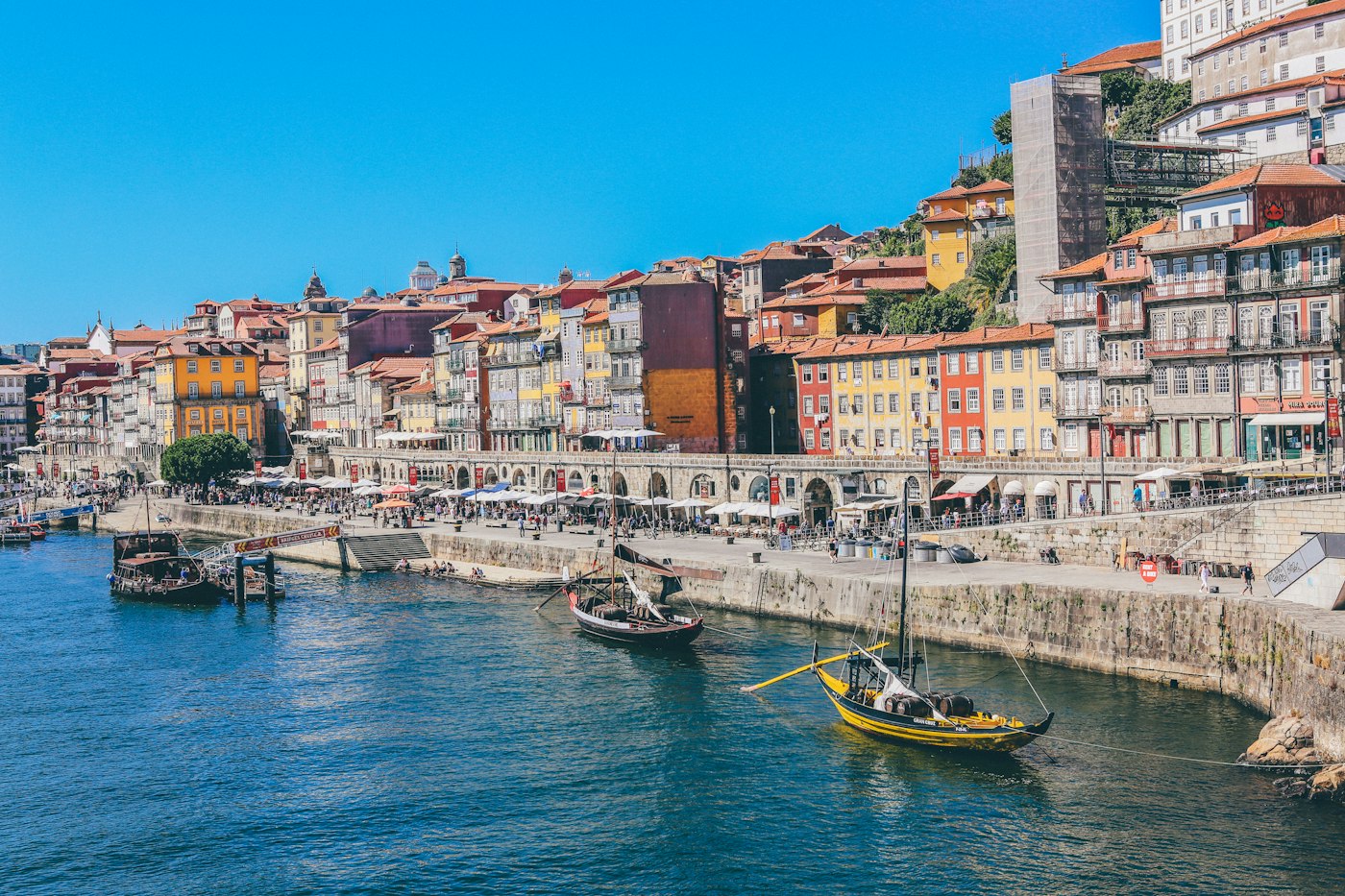
Portugal is the most natural destination for Brazilians moving abroad. The shared language removes one of the biggest barriers to relocation, and the two countries have a long-standing friendship treaty — the Tratado de Amizade, Cooperação e Consulta — that gives Brazilians unique privileges unavailable to other non-EU nationals. This guide walks you through every practical step, from choosing your visa to buying groceries.
1. Which visa do you need?
Brazil and Portugal share a unique legal framework. After residing legally in Portugal for two years, Brazilians can apply for Estatuto de Igualdade de Direitos e Deveres — effectively national treatment in most areas of civil life. Before that, the visa you need depends on why you're moving.
Visto de Trabalho (D1)
Job offerFor those with a signed employment contract or job offer from a Portuguese employer. The employer submits a request to AIMA (former SEF) before you apply at the Portuguese consulate in Brazil.
Visto D7 (Renda passiva)
Remote / retiredThe most popular visa for digital nomads, remote workers, and retirees. Requires proof of passive or remote income above Portuguese minimum wage (~€820/month). Very high approval rate for Brazilians.
Visto de Estudante (D4)
StudentsFor enrolment in Portuguese universities or language schools. Holders can work up to 20 hours/week during term. Widely used by Brazilians attending public universities (low tuition fees for non-EU: ~€697–7,000/year).
Visto D2 (Empreendedor)
Business ownersFor entrepreneurs, freelancers, and independent professionals. You must register a company (or prove freelance activity) and show a viable business plan. Common for tech founders and consultants.
Reagrupamento Familiar
FamilyIf your spouse, parent, or child already holds Portuguese residence, you can join them via family reunification. This is one of the fastest paths — AIMA processing once you're in the country can be done together.
Visto Nomad Digital
Remote workersLaunched in 2022 specifically for remote workers employed by non-Portuguese companies. Income threshold: 4x Portuguese minimum wage (~€3,280/month). Grants a temporary residence permit, not just a visa.
2. Documents to prepare in Brazil
Portugal is paperwork-intensive. Prepare everything in Brazil before you leave — apostilling documents there is much cheaper (R$50–200 per document) than trying to do it in Portugal.
Essential documents (all require apostille)
- Passaporte válido — valid for at least 6 months beyond your planned stay; pages for two visa stickers minimum
- Certidão de nascimento — original + certified translation if issued in Portuguese (no translation needed); apostille required
- Certidão de casamento / divórcio — if applicable, apostilled
- Antecedentes criminais (federal + estadual) — criminal background check from Polícia Federal and your state SSP, issued within 3 months; apostilled
- Comprovante de meios de subsistência — bank statements (last 3 months) or income proof (payslips, pension certificates)
- Comprovante de alojamento em Portugal — rental contract, hotel booking, or letter of invitation from Portuguese resident
- Fotos tipo passe — 2 passport-size photos with white background
Where to apostille in Brazil
- Federal documents (Polícia Federal, CPF): Ministério da Justiça online portal
- State documents (birth certificates, marriage): Cartório de Registro Civil in your state
- Academic diplomas: Universities or MEC (via MEC portal)
3. Your first 30 days in Portugal
Brazilians can enter Portugal without a visa for stays up to 90 days as tourists. However, if you plan to live there, you must enter with your D-visa or be in the country legally. Here's the order of operations:
Visit any Finanças office (AT) with your passport. Takes 15 minutes. You need this for literally everything — bank, housing, phone, healthcare. Cost: €10–15. You can also do it via a fiscal representative before you arrive (useful for opening a bank account from Brazil).
Portal das Finanças →With your NIF and passport, you can open accounts at BPI, Millennium BCP, Caixa Geral de Depósitos, or Santander. The digital option ActivoBank (no fees) or N26 is faster. You need a bank account to receive salary, pay rent, and set up utilities.
Once you have a rental contract, go to your local Junta de Freguesia (parish council) to register your address. You'll need this for AIMA, health centre, and school enrolment. Bring your passport, NIF, and rental contract.
Schedule your residence permit appointment at aima.gov.pt. Book immediately on arrival — current wait times can be 3–6 months. Bring all apostilled documents, NIF, bank statement, and address proof.
With your address registration and NIF, go to your nearest Centro de Saúde (USF) and register. You'll be assigned a family doctor (Médico de Família). This is free. If not yet registered with AIMA, you may need to join as a user (utente), which is also free.
SNS portal →Required if you're employed or self-employed. Register at the local Centro Distrital da Segurança Social with your NIF, passport, employment contract (if applicable), and address proof.
Segurança Social →Major operators: NOS, MEO, Vodafone. Pre-paid plans from €10/month; post-paid with 30–100GB from €15–30/month. NOS tends to have better coverage outside cities. You'll need a Portuguese number for MBWay (mobile payments) and many online services.
4. Cost of living
Portugal is significantly cheaper than Western Europe — but housing in Lisbon and Porto has risen sharply since 2020. For a Brazilian used to high prices in São Paulo, the overall quality of life for the cost is excellent.
| City | 1-bed rent (centre) | Monthly budget (1 person) | Avg net salary |
|---|---|---|---|
| Lisbon (Lisboa) | €1,000–1,800/mo | €1,600–2,400/mo | €1,200–2,000/mo |
| Porto | €750–1,300/mo | €1,200–1,900/mo | €1,000–1,700/mo |
| Braga | €550–900/mo | €950–1,400/mo | €900–1,400/mo |
| Coimbra | €500–850/mo | €900–1,300/mo | €900–1,400/mo |
| Setúbal / Almada | €700–1,100/mo | €1,100–1,600/mo | €1,000–1,600/mo |
Monthly expense breakdown (Lisbon, 1 person)
- Rent (T1/studio, Lisbon suburbs): €800–1,200
- Utilities (electricity, water, internet): €80–130
- Groceries: €200–320
- Transport (Viva Viagem monthly pass): €40
- Eating out (1 meal/day at tasca): €150–250
- Health insurance (private top-up): €30–60
- Mobile phone: €15–30
5. Finding housing
Portugal's rental market is competitive, especially in Lisbon and Porto. The housing crisis has pushed rents up significantly — plan your search early and be prepared to move fast when you find something.
Where to search
- Idealista.pt — the largest portal, best coverage
- Imovirtual.com — strong in Porto and smaller cities
- OLX.pt — direct landlord listings, often cheaper
- Uniplaces.com — furnished rooms and apartments for students
- Facebook: Brasileiros em Lisboa — community housing tips and sublets
What landlords typically ask for
- NIF (mandatory)
- 2–3 months' rent as deposit (caução)
- Work contract or proof of income (3x monthly rent is a common benchmark)
- Portuguese bank account details for SEPA direct debit
- Some landlords also ask for a guarantor (fiador), especially if you're new to the country
Popular expat neighbourhoods
- Lisbon: Mouraria (affordable, historic), Arroios (diverse, central), Almada & Setúbal (cheaper, 20–30 min by ferry)
- Porto: Bonfim (hip, affordable), Matosinhos (beach access), Vila Nova de Gaia (cheaper than Porto proper)
- Suburbs: Amadora, Loures, Sintra — all with direct metro/train to Lisbon, rents 30–40% cheaper
6. Healthcare (SNS)
Portugal's SNS (Serviço Nacional de Saúde) is a universal public health system. As a legal resident, you have the right to register and access most services free or at a very low cost — much better coverage than in Brazil's public system.
How to access the SNS
- Register at your local Centro de Saúde / USF with your NIF, passport, and address proof
- You'll be assigned a médico de família (family doctor) for primary care
- Emergency care at urgências (A&E) is available to everyone regardless of status
- Specialist appointments are accessed via referral from your family doctor; wait times can be long (months)
Costs
- GP consultations (after registration): free or taxa moderadora €5–7.50
- Emergency (urgência): €20–30 taxa moderadora
- Prescriptions: 15–37% co-pay depending on medication category
- Certain groups (children under 18, pregnant women, low-income) are exempt from taxas moderadoras
Private health insurance
Many Brazilians add a private health plan to get faster access to specialists and private hospitals. Major insurers: Médis, AdvanceCare, Fidelidade, Tranquilidade. Plans range from €25–80/month depending on age and coverage. The SNS24 app (and phone line 808 24 24 24) lets you consult a nurse by phone and avoid unnecessary ER visits.
7. Language & community
The Portuguese you speak will be immediately understood — though you'll notice differences in vocabulary, expressions, and the European accent. Most Portuguese find Brazilian Portuguese charming, and there's rarely friction. The shared language means you can start building social life from day one.
Key vocabulary differences to know
- Autocarro (PT) = ônibus (BR) · Metro same · Comboio (PT) = trem (BR)
- Casa de banho (PT) = banheiro (BR) · Pequeno-almoço (PT) = café da manhã (BR)
- Telemóvel (PT) = celular (BR) · Computador same · Frigorífico (PT) = geladeira (BR)
Brazilian communities in Portugal
- Brasileiros em Lisboa — 100k+ members Facebook group
- Brasileiros no Porto — active Facebook community
- Casa do Brasil em Lisboa (Rua Afonso de Albuquerque) — cultural centre with events and legal support
- The neighbourhood of Arroios in Lisbon is known as the Brazilian quarter — Brazilian restaurants, barbershops, groceries
For the cultural adjustment side of the move, our Psychology & Wellbeing pillar has expert-backed guidance on managing the transition. And the IC360 community connects you with Brazilians already living in Portugal who can share tips, reviews, and contacts.
8. Schools & education
Portugal's public school system is free for residents, including children of immigrants. The academic year runs September to June. School is compulsory from age 6 to 18.
School types
- Público (free): Instruction in Portuguese. Enrol at the local school based on your address (área de residência). Contact the school directly with your NIF, address registration, and child's birth certificate (apostilled).
- Privado / Cooperativo: Private schools with more structured hours and often better resources. Fees: €200–600/month.
- Internacional: Lisbon and Porto have British, German, French, and American international schools. Fees: €8,000–20,000/year. Strong expat communities.
University & recognition of diplomas
Brazilian university degrees are generally recognized in Portugal given the shared language. However, for regulated professions (medicine, law, engineering), you'll need official recognition via the relevant professional chamber (Ordem). Contact the DGES (Direção-Geral do Ensino Superior) for university equivalences.
9. Culture & daily life
Despite speaking the same language, Portugal has a distinct culture. These differences can catch Brazilians off-guard:
Punctuality is real here
Portuguese culture values punctuality far more than Brazilian culture. A 20-minute delay to a dinner party is acceptable; being 30 minutes late to a work meeting is not. Adjust your internal clock.
Reserve in public spaces
Portuguese people are warm once you know them but more reserved with strangers. Loud conversations on public transport are frowned upon. Don't take the quiet for coldness — it's just a different social code.
Meal times are later
Lunch is 1–3pm; dinner rarely before 8pm. Restaurants often don't even open for dinner before 7:30pm. Portions are generous. The couvert (bread, butter, olives) placed on your table is charged — you can send it back if you don't want it.
Bureaucracy is slow (very)
Portuguese public administration is notoriously slow — and AIMA is the slowest of all. Book appointments immediately upon arrival. Bring paper copies of everything (always). Expect delays of months, not days.
Winter is grey and rainy
Lisbon winters (Nov–Feb) are mild but damp and grey. Most buildings have poor insulation — it can feel colder inside than outside. Brazilians from warmer states often find this surprisingly hard. Porto is wetter than Lisbon.
MBWay is the payment standard
MBWay is Portugal's mobile payment app (linked to your bank account and phone number). Nearly everyone uses it to split bills, pay rent, and send money. Set it up in your first week — it's essential for daily life.
Your Brazilian licence is temporary
Brazil and Portugal have an agreement that lets you exchange your CNH for a Portuguese driving licence within 90 days of obtaining residency — no test required. Do it early, as it becomes a legal requirement for residing long-term.
Saudade is real
Portugal has a cultural concept of saudade — a bittersweet longing for things past or absent. Fado music embodies it. Don't be surprised if locals seem melancholic about beautiful things. It's a feature, not a bug.
Different plugs & voltage
Portugal uses Type F (Schuko) plugs at 230V/50Hz. Brazil uses Type N at 127/220V (varies by state). Check your appliances and bring adapters or plan to buy new ones. Most modern electronics (laptops, phone chargers) are dual-voltage.
10. Supermarket guide
Shopping in Portugal is intuitive for Brazilians — you'll recognise most products and the layout is familiar. Here's what you need to know:
Main supermarket chains
- Continente (owned by Sonae) — largest chain, good quality, own-brand products well-priced; has Continente Modelo (smaller) and Continente Bom Dia (express)
- Pingo Doce — excellent prepared meals and fresh food; competitive prices; yellow label own brand is good value
- Aldi / Lidl — cheapest option for basics; Lidl in particular has excellent produce; good for weekly stock-up
- Intermarché — strong in smaller towns; good meat and fish section
- Mercadona (from Spain) — growing presence; own-brand Hacendado products are popular
- El Corte Inglés (Lisbon, Porto) — premium supermarket in the basement; international products
Payment and loyalty
- Continente card: free loyalty card with cashback and fuel discounts; worth getting
- Cartão Pingo Doce: points system, monthly double-points weekends
- Most supermarkets accept Multibanco (PT bank cards), Visa/Mastercard, and MBWay. Cash still accepted everywhere.
Brazilian products in Portugal
Lisbon's Arroios neighbourhood and Mouraria have several Brazilian grocery stores selling açaí, guaraná, pão de queijo mix, farofa, feijão carioca, and other staples. Online via Brasital or similar Brazilian import shops.
Food vocabulary cheat sheet
- Frango (BR/PT same) · Carne de vaca = carne bovina · Porco same · Bacalhau = dried cod (staple!)
- Natas = creme de leite · Iogurte same · Queijo same · Manteiga = manteiga
- Batata same · Cenoura same · Tomate same · Alface same
- Cerveja same · Vinho same · Sumo = suco · Água com gás = sparkling water
11. Essential apps for life in Portugal
Portugal's universal mobile payment app. Linked to your bank account via phone number. Used to split bills, pay rent, buy online, and transfer money. Essential from day one.
↗ mbway.ptNational health service app for scheduling consultations, viewing medical records, requesting renewals, and accessing your vaccination booklet. Also the phone line 808 24 24 24 for nurse triage.
↗ sns.gov.ptBuy and manage intercity and commuter train tickets. Great for getting to Porto, Coimbra, Faro, or Braga. Book in advance for cheaper fares. Also has real-time delay information.
↗ cp.ptPortugal's electronic toll system. If you drive, you need a Via Verde transponder or register your plate for the Via Verde identifier system. Also handles some parking payments and can be used at some fuel stations.
↗ viaverde.ptVery popular in Portugal for intercity travel. A rideshare from Lisbon to Porto can cost €10–20 vs €25+ by train. Great for meeting locals and getting around on a budget.
↗ blablacar.ptBest option for sending money between Brazil and Portugal (BRL/EUR). Significantly cheaper than bank transfers. Also useful as a multi-currency account while you get your Portuguese bank set up.
↗ wise.comManaging your finances across two countries?
Our Finance pillar covers live BRL/EUR exchange rates, FX alerts, double taxation treaty between Brazil and Portugal, and more.
Open Finance tools →Ready to plan your move to Portugal?
Create your free IC360 account to get a personalised relocation plan, live BRL/EUR FX alerts, your interactive Portugal checklist and access to the Brazilian expat community — all in one place.
Free forever · No credit card · Takes 2 minutes