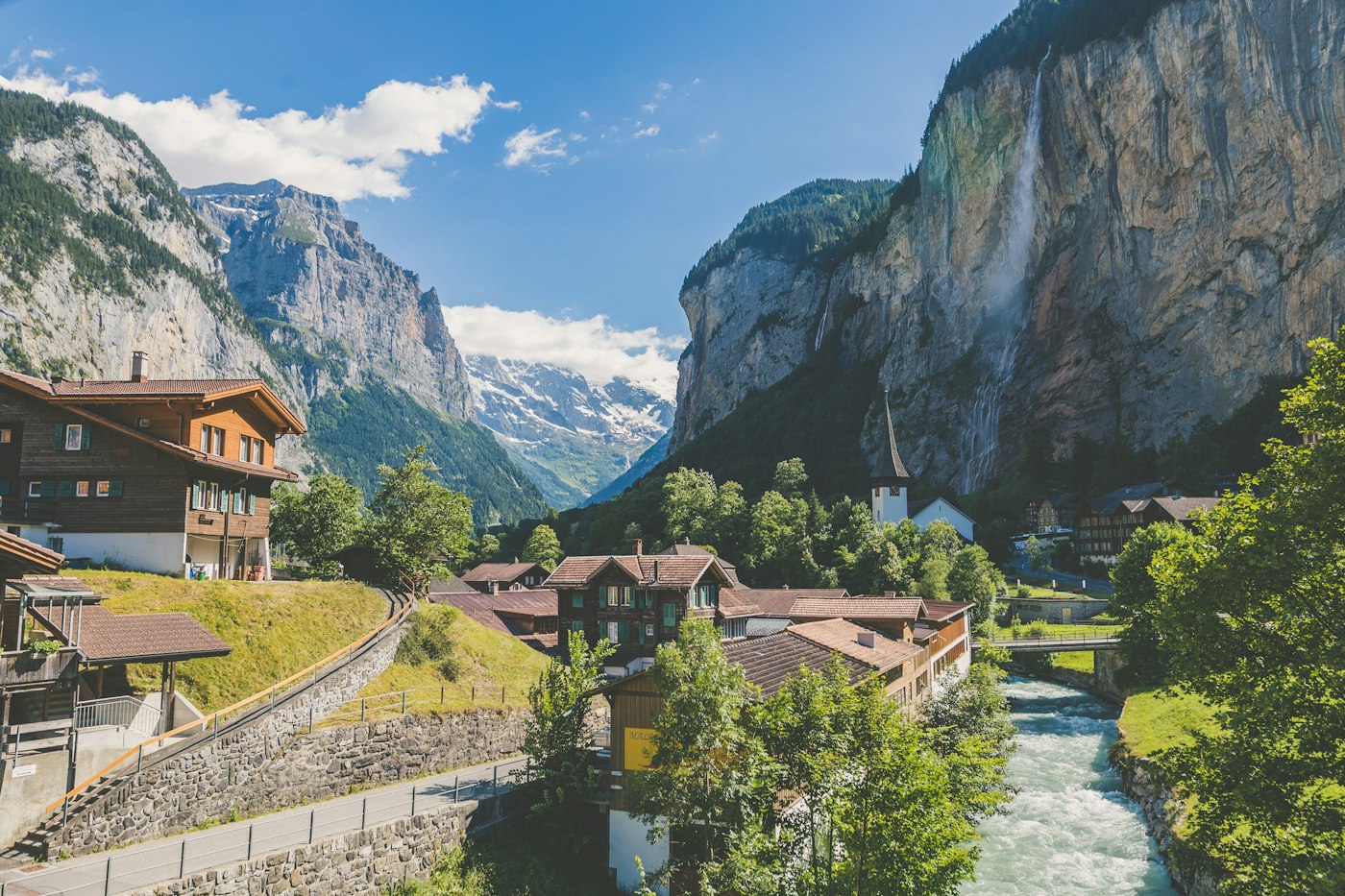
Switzerland isn't in the EU, and it isn't easy — but it consistently ranks among the highest-paying, highest quality-of-life destinations for Brazilians willing to navigate its quota system and higher cost of living. Salaries in Zurich or Geneva can be 3–4x what the same role pays in São Paulo, even after Switzerland's famously high rents and health insurance premiums. This guide walks Brazilian nationals through the entire process: from the permit quota system to registering with your commune, opening a bank account, and adjusting to a country where punctuality and quiet Sundays are taken very seriously.
1. Which permit do you need?
Brazil is a "third country" (non-EU/EFTA) for Swiss immigration purposes, which means most work-based routes go through an annual quota and a labor market test — your employer must show no suitable EU/EFTA or Swiss candidate was available. Permits are tied to your employer and canton, and processing can take 8–16 weeks. Plan your move at least 3–4 months ahead.
Permit L (short-term)
Contracts <1 yearFor fixed-term contracts or assignments under 12 months. Renewable up to 24 months in some cantons. Counted against the annual non-EU quota.
Permit B (initial residence)
Skilled workersThe standard route for skilled non-EU professionals with an open-ended or 12+ month contract. Renewable annually, tied to continued employment. University degree + specialist skills usually required.
Student permit
Study routeFor enrollment at a recognized Swiss university (ETH Zurich, EPFL, universities of Geneva/Zurich/Basel). Allows up to 15 hours/week of work during term.
Family reunification / Permit Ci
DependentsSpouses and minor children of B/C permit holders can apply within 5 years of the sponsor's residence. Permit Ci grants accompanying partners full work rights.
⚠️ Quota reality check: Annual non-EU quotas are limited and split across cantons — Zurich and Zug fill up fast. Roles in tech, finance, life sciences and engineering have the best odds. After 10 years of continuous B permits (5 years for some agreements), you can apply for the permanent Permit C.
2. Documents to prepare in Brazil
Switzerland recognizes apostilles (Hague Convention), so Brazilian documents need an apostille from the issuing state's civil registry, not full consular legalization.
- Diploma + transcript — apostilled, then evaluated by swissuniversities / SERI if a regulated profession.
- Certified translation — into German, French, or Italian depending on the canton (Zurich/Basel = German; Geneva/Lausanne = French; Ticino = Italian).
- Criminal record certificate (Antecedentes Criminais) — apostilled, issued within the last 3–6 months.
- Birth and marriage certificates — apostilled and translated if bringing family.
- Signed employment contract — your employer typically files the permit application with the cantonal migration office on your behalf.
- Proof of accommodation — a lease or hosting confirmation is often required before the permit is issued.
3. Your first 30 days in Switzerland
✅ Order matters: Commune registration → residence permit collection → AHV/AVS number → bank account → mandatory health insurance (within 3 months) → tax registration.
- Register at the commune (Einwohnerkontrolle / Contrôle des habitants) — within 14 days of arrival, at your local municipality. Bring passport, employment contract, lease, and passport photos.
- Collect your biometric residence permit — fingerprints and photo taken at the cantonal migration office shortly after registration.
- Get your AHV/AVS number — Switzerland's social security number, usually issued automatically once your employer registers you, or apply via the AHV/IV compensation office.
- Open a bank account — UBS, PostFinance, Migros Bank, or Raiffeisen are common starter banks; bring your permit, passport, and proof of address.
- Enroll in mandatory health insurance — you have 3 months from arrival to choose a Krankenkasse; coverage is retroactive to your arrival date, so don't delay.
- Register for withholding tax (Quellensteuer) — most B/L permit holders are taxed at source directly from payroll; you may reclaim overpayments via annual declaration.
4. Cost of living: 5 major cities
Switzerland is expensive by any measure, but salaries usually scale with it. Zug offers the lowest cantonal tax rate in the country and has become a magnet for crypto and finance professionals.
| City | 1-bed rent | Monthly budget | Avg salary |
|---|---|---|---|
| Zurich | CHF 1,800–2,500/mo | CHF 3,800/mo | CHF 6,500–8,500/mo |
| Geneva | CHF 1,900–2,700/mo | CHF 4,000/mo | CHF 6,500–9,000/mo |
| Basel | CHF 1,400–1,900/mo | CHF 3,200/mo | CHF 6,000–8,000/mo |
| Zug | CHF 1,700–2,300/mo | CHF 3,600/mo | CHF 7,000–9,500/mo |
| Lausanne | CHF 1,300–1,800/mo | CHF 3,000/mo | CHF 5,800–7,500/mo |
Use the IC360 finance pillar to convert BRL salary offers into CHF purchasing power and track exchange rate movements before you sign a contract.
5. Finding housing
The Swiss rental market — especially in Zurich and Geneva — is one of the most competitive in Europe. Landlords routinely receive 20–50 applications per listing.
- Homegate.ch and ImmoScout24.ch — the two dominant listing platforms.
- Comparis.ch — good for comparing rent prices and insurance.
- Application dossier — expect to submit a debt collection extract (Betreibungsauszug), employment contract, ID, and references upfront, often before even viewing.
- Deposit — typically 2–3 months' rent, held in a blocked bank account (Mietkaution) in your name.
- Consider short-term furnished rentals (Airbnb, Homelike, or corporate housing) for your first 1–2 months while you compete for a long-term lease.
6. Healthcare
Switzerland has no public insurer — everyone is legally required to buy private basic health insurance (Krankenkasse / assurance maladie) within 3 months of establishing residence.
- Basic insurance (LAMal/KVG) — mandatory, community-rated (not based on income or health status), from providers like CSS, Helsana, SWICA, or Sanitas.
- Premiums — roughly CHF 300–500/month per adult, varying by canton and chosen deductible (Franchise, CHF 300–2,500).
- Cantonal subsidies — lower-income residents can apply for premium reductions (prämienverbilligung) through the canton.
- Supplementary insurance — optional, covers private rooms, dental, and alternative medicine.
7. Language & community
Switzerland has four official languages, and which one matters most depends entirely on your canton: German in Zurich/Basel/Bern, French in Geneva/Lausanne, Italian in Ticino.
- Migros Klubschule — affordable German/French courses nationwide.
- InterNations — active expat networking chapters in Zurich, Geneva and Basel.
- Search Facebook for "Brasileiros em Zurique," "Brasileiros em Genebra," and similar city-specific groups for tips and second-hand marketplaces.
- Join the IC360 community to connect with other Brazilians already navigating the Swiss permit process.
8. Schools & education
Public education is organized by canton, taught in the local language, and free — including for foreign residents. Quality is consistently excellent.
- Public schools — compulsory from ages 4–6 through 15–16 depending on canton; strong vocational tracks (apprenticeships) alongside academic ones.
- International schools — Zurich International School, International School of Geneva (Ecolint), Institut Le Rosey — CHF 20,000–40,000/year, taught in English.
- Enrollment happens through the commune shortly after registration; catchment areas are strict.
9. Culture & daily life shocks
Quiet Sundays
Shops close, lawnmowers and loud laundry are frowned upon, and neighbors do enforce the unwritten rules.
Extreme punctuality
Trains leave to the minute and being 5 minutes late to a meeting is considered disrespectful.
Strict recycling
Official garbage bags (Kehrichtsackgebühr) cost money and unsorted trash won't be collected.
Reserved warmth
Swiss colleagues can seem formal at first — friendships build slowly but tend to be durable.
Cash still matters
Despite the wealth, cash and Twint (a local payment app) are used more than you'd expect.
Direct democracy
Referendums happen up to 4 times a year on everything from taxes to zoning — expect flyers everywhere.
10. Supermarket & daily shopping guide
- Migros and Coop — the two dominant cooperative chains, present in nearly every neighborhood.
- Denner — discount chain, noticeably cheaper.
- Aldi Suisse / Lidl Schweiz — budget options gaining ground.
- Most shops close by 6:30–7pm on weekdays and are shut all day Sunday except train station kiosks.
- Groceries are genuinely expensive versus Brazil — budget CHF 500–700/month per person.
11. Essential apps
Book and validate train, tram and bus tickets nationwide — the backbone of Swiss mobility.
↗ sbb.chThe dominant Swiss mobile payment app — used for splitting bills, market stalls, and small shops.
↗ twint.chCompare Krankenkasse premiums, rent, and insurance products before you commit.
↗ comparis.chA popular starter bank for newcomers, with straightforward account opening for residents.
↗ postfinance.chReady to plan your move?
Create your free IC360 account to get a personalised relocation plan, live BRL/CHF FX alerts, your interactive Switzerland checklist and access to the expat community — all in one place.
Free forever · No credit card · Takes 2 minutes