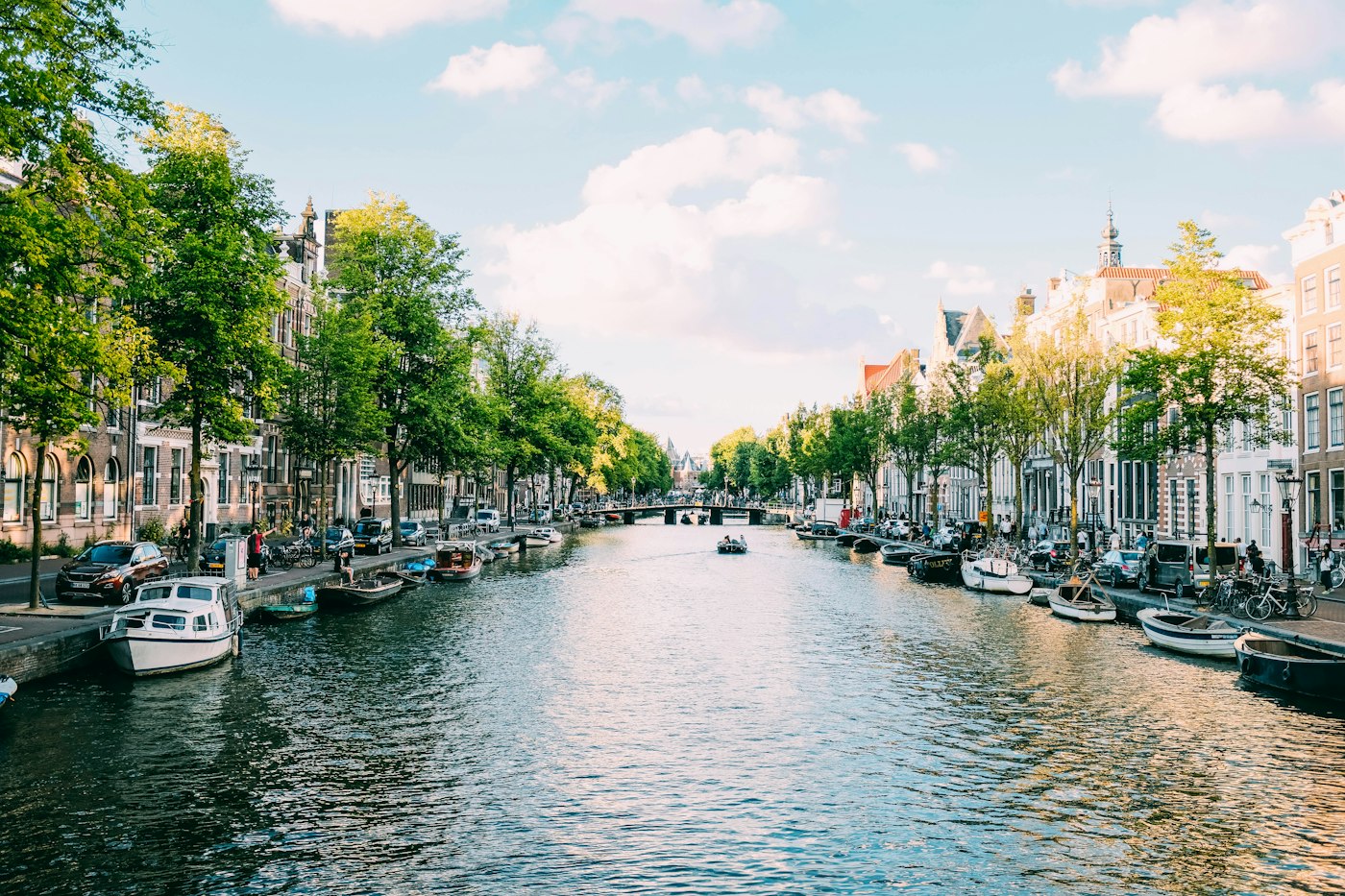
Amsterdam runs on two things: bicycles and directness. The city is compact, flat and gorgeous — canal-ringed, cycle-first, and home to one of Europe's most international, English-friendly job markets, anchored by Booking.com, Adyen, Uber's EU operations and a fast-growing fintech scene. It's also in the middle of a genuine housing emergency: the Netherlands builds far fewer homes than it needs, and Amsterdam absorbs the sharpest end of that shortage. This guide covers the real trade-offs — what a flat actually costs, which neighborhood suits your life, and how the 30% ruling and Dutch bureaucracy actually work for a newcomer landing in 2026.
1. Why Amsterdam (and why not)
The case for: one of Europe's most livable and walkable/cyclable cities, an overwhelmingly English-speaking professional environment (many companies operate entirely in English), efficient and honest public institutions, strong worker protections, and the 30% ruling — a tax facility that lets qualifying skilled migrants receive up to 30% of their salary tax-free for a period of years (rules have tightened in recent cycles, so verify current thresholds and duration before counting on it). Central location for European travel, with Schiphol Airport among the best-connected hubs on the continent.
The honest counterpoints: the housing shortage is Amsterdam's defining problem — vacancy is near zero, prices have risen sharply, and non-EU newcomers without an employer's help can spend months searching. Dutch directness (bluntness that reads as rude to many cultures) is a genuine adjustment, and while English gets you through daily life and most jobs, Dutch is still required for citizenship, some public-sector jobs and deeper social integration. Winters are grey and windy for long stretches. If housing pressure or Dutch bureaucracy feels like too much, compare with Germany or Berlin on the IC360 Community.
2. Neighborhoods: finding your buurt
Amsterdam is small enough that most central neighborhoods are a 15–20 minute bike ride from each other. Rents below are typical for a 1-bedroom on the free-sector market (unregulated, above the social-housing threshold), unfurnished.
De Pijp
Lively & multiculturalAmsterdam's most diverse and energetic neighborhood — Albert Cuyp market, countless bars and restaurants, a magnet for young professionals and expats alike.
Jordaan
Postcard canalsNarrow streets, gabled houses and quiet courtyards (hofjes) — the most classically "Amsterdam" district, and priced accordingly.
Oud-West
Young professionalFoodhallen, De Hallen cultural complex, and a strong concentration of remote workers and creatives — walkable to the center without Jordaan prices.
Amsterdam Noord
Creative & up-and-comingA free ferry ride (5 minutes, runs 24/7) across the IJ river — former industrial land now home to NDSM's creative scene and A'DAM Tower, with noticeably better value.
Zuid (Apollobuurt / Zuidas)
Upscale & corporateHome to the Zuidas business district (law firms, banks, the WTC) and Vondelpark — leafy, quiet and popular with relocating executives and families.
Westerpark
Green & trendyBuilt around its namesake park and the Westergasfabriek cultural complex — a favorite for young families and creatives who want green space without leaving the center.
Oost
Diverse & familyOosterpark, the Dappermarkt street market and a genuinely mixed community — a common landing spot for families needing more space for the money.
Bos en Lommer
Best valueWest of the center, still gentrifying — noticeably cheaper than Oud-West next door, with good tram links and a growing food scene.
3. Cost of living: a realistic Amsterdam budget
| Item | Monthly cost | Notes |
|---|---|---|
| Rent (1-bed, free sector) | €1,600–2,300 | Rooms in shared housing €700–1,100 |
| Zorgverzekering (health insurance) | €130–160 | Mandatory, choose your own provider |
| Public transport (GVB) | €100–120 | Or cycle everywhere and pay far less |
| Groceries | €280–400 | Albert Heijn/Jumbo, single person |
| Phone + internet | €40–60 | KPN, T-Mobile or Ziggo bundles |
| Municipal taxes & waste | €30–50 | Gemeente Amsterdam annual charges, prorated |
| Eating out / social life | €200–400 | Amsterdam prices run above the Dutch average |
| Realistic single total | €2,400–3,300 | Higher with the 30% ruling boosting net pay |
Salaries in Amsterdam's tech and finance sectors are among the highest in continental Europe: software engineers €55,000–90,000+, finance/legal roles €60,000–110,000. The 30% ruling can materially change your take-home pay if you qualify — model your specific numbers on our Finance pillar.
4. Finding housing (a genuine emergency)
Amsterdam's housing shortage is one of the most severe in Western Europe. Vacancy in the free-sector rental market is near zero, and listings can attract 50+ viewings requests within an hour. Scams targeting foreigners searching from abroad are extremely common — never transfer money before viewing a property in person or via a verified video call with a licensed agent.
Tactics that actually work
- Ask your employer first: many companies hiring international talent offer relocation packages that include a housing agent (makelaar) or temporary corporate housing — use this before searching alone.
- Register with a licensed makelaar (rental agent) — reputable ones charge the landlord, not you; be suspicious of any agent asking for a large upfront "search fee".
- Set alerts on Funda and Pararius, and consider HousingAnywhere for a furnished bridge period.
- Have your BSN application started — you'll need proof of address for many rental applications, creating a chicken-and-egg problem; a short furnished sublet or corporate housing often solves this for the first month.
- Consider Amsterdam Noord, Oost or the wider Randstad (Amstelveen, Haarlem, Zaandam) — a 15–25 minute commute buys significantly more space and lower rent.
⚠️ Know your rights: most rentals below roughly €900/month base rent fall under the regulated "sociale huur" system with tenant protections and rent caps; anything above is "vrije sector" (free market) with fewer price controls. Always insist on a written contract and never pay cash without a receipt.
5. Getting around: bikes first, everything else second
- The bicycle is the default — buy a used bike (€100–250 on Marktplaats or from a fietsenwinkel) immediately; Amsterdam has more bikes than people and dedicated cycle infrastructure everywhere. Use two locks; bike theft is common.
- GVB — trams, buses, metro and the free Noord ferries, all on the national OV-chipkaart system; a monthly pass runs roughly €100–120, though most locals cycle instead.
- NS trains — fast, frequent connections to Utrecht, Rotterdam, The Hague and beyond, useful if you live in the wider Randstad commuter belt.
- Schiphol Airport — 15 minutes by direct train from Amsterdam Centraal, one of Europe's best-connected hubs.
- Driving — actively discouraged in the center; parking is expensive and scarce, and most expats never own a car in Amsterdam proper.
6. Healthcare in Amsterdam
The Netherlands requires everyone who lives or works there to buy mandatory private health insurance (Zorgverzekering, "basisverzekering") within 4 months of arrival — it's not optional, and back-payments apply if you delay.
- Choosing a provider — compare via Zorgwijzer; premiums run roughly €130–160/month for the basic package, with optional supplementary coverage (dental, physio) on top.
- Zorgtoeslag — a government healthcare subsidy for lower incomes; check eligibility via the Belastingdienst (tax office) once you have a BSN.
- Huisarts (GP) — register with a local GP practice near your address; they're the gatekeeper for specialist referrals.
- English-speaking care — widely available; most GPs and hospitals in Amsterdam operate comfortably in English given the international population.
- Mental health — our Psychology pillar lists relocation-specialized, multilingual psychologists you can book directly.
7. Jobs & industry
Amsterdam is a genuine European tech and finance hub — Booking.com, Adyen, Uber's EU headquarters, Netflix's EMEA operations and a dense fintech and scale-up ecosystem all operate here, largely in English.
- Where to look: LinkedIn, IamExpat Jobs, and company career pages — many roles explicitly target international candidates.
- Salary reality: tech and finance roles run €55,000–110,000+; the 30% ruling can add meaningfully to net take-home for qualifying skilled migrants relocating from abroad.
- Highly Skilled Migrant visa sponsorship — most international hires arrive via employer sponsorship under this scheme, which has a minimum salary threshold that changes annually — verify the current figure before negotiating your contract.
- Check visa options for your nationality in our route guides (e.g., Brazil→Netherlands) and the Work & Career pillar.
8. Language & community
Amsterdam is one of the most English-friendly cities in continental Europe — most workplaces, services and even government counters operate smoothly in English. That said, Dutch unlocks deeper integration, is required for citizenship, and helps enormously with reading official mail (the Belastingdienst rarely writes in English).
- Dutch directness is the single biggest cultural adjustment — blunt feedback, skipped small talk, and disagreement voiced openly are all normal and not personal.
- Language schools — the Regina Coeli, ROC-run courses and the municipality's inburgering (integration) program for those who need it legally.
- IamExpat and Meetup — extremely active expat community infrastructure, from professional networking to social meetups.
- Borrel culture — after-work drinks (borrel) are the primary informal networking ritual; showing up matters as much as what you say.
- The IC360 Community — meet people moving to Amsterdam on your exact route, ask questions before you land.
9. Schools & education
- Public and Dutch-bilingual schools — free, high-quality, and increasingly offer Dutch-English bilingual tracks (tweetalig onderwijs) for internationally mobile families.
- International schools — International School of Amsterdam and the British School of Amsterdam — IB and British curricula, €15,000–25,000/year, popular with relocating corporate families.
- Childcare (kinderopvang) — subsidized but in high demand; register as early as possible, ideally during pregnancy or immediately on confirming your move date.
- Compulsory schooling starts at age 5, though most children start at 4; homeschooling is heavily restricted in the Netherlands.
10. Culture & daily life: Amsterdam specifics
Dutch directness isn't rudeness
Colleagues will tell you exactly what they think, skip pleasantries, and expect the same back. It takes adjustment, but it's efficient once you recalibrate.
Going Dutch, literally
Splitting the bill precisely (even with an app like Tikkie) is completely normal, including among close friends — it's not seen as cheap.
Bike rules are strict and social
Learn the hand signals and lane etiquette quickly — locals will let you know (loudly) if you're doing it wrong, and enforcement of bike traffic rules is real.
Agendas rule social life
Spontaneous plans are rare — Dutch social life runs on calendars booked weeks in advance, even for casual coffee catch-ups.
Consensus culture (poldermodel)
Decisions, at work and in local government, favor extensive consultation and consensus over top-down authority — meetings can feel slow to newcomers used to faster hierarchies.
Weather is a daily topic
Wind and rain are constants for much of the year — proper rain gear for cycling isn't optional, it's survival equipment.
11. Essential Amsterdam apps
The definitive Dutch public transport planner — combines GVB, NS and every regional operator into one route.
↗ 9292.nlSend a payment request link in seconds — the default way the Dutch split bills and collect group payments.
↗ tikkie.meYour digital identity for all Dutch government services — taxes, healthcare subsidies, municipal registration. Apply as soon as you have a BSN.
↗ digid.nlBook and check national train times — essential for weekend trips around the compact, well-connected Netherlands.
↗ ns.nlThe Dutch classifieds site — used bikes, furniture and flat-share leads for furnishing your new place fast.
↗ marktplaats.nlMid-market currency exchange for moving savings into euros — pair it with FX rate alerts on the IC360 Finance pillar.
↗ wise.comReady to make Amsterdam home?
Create your free IC360 account to get a personalised relocation plan, live FX alerts, your interactive Netherlands checklist and access to the Amsterdam expat community — all in one place.
Free forever · No credit card · Takes 2 minutes