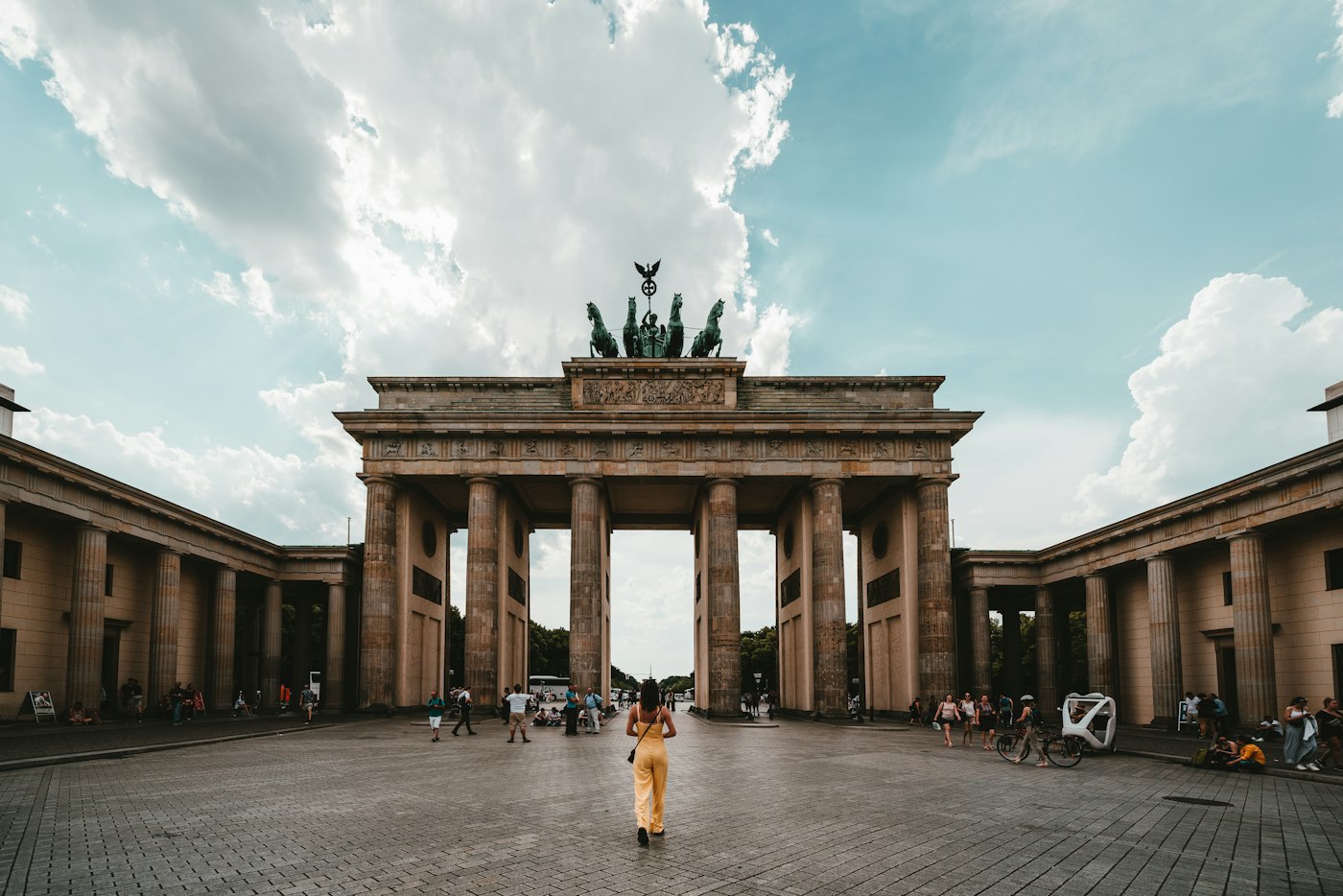
As a Portuguese citizen — or an EU resident holding a Portuguese passport — moving to Germany is one of the smoothest relocations in Europe. Thanks to EU freedom of movement, you don't need a visa or a residence permit: you can simply arrive, register, and start working. The real work is administrative, not legal. This guide walks you through the German bureaucracy — the famous Anmeldung, tax ID, health insurance and banking — plus housing, cost of living and settling in.
1. Your right to live and work in Germany
Portugal has been an EU member since 1986 and Germany is a founding member. Under Article 21 of the Treaty on the Functioning of the EU, you have the right to enter, live and work in Germany without any visa or work permit. There is no residence card to apply for and no income threshold. What you must do is register your address (Anmeldung) once you settle — this is a legal obligation for everyone, EU citizen or not.
Freedom of movement (Freizügigkeit)
AutomaticYour EU citizenship gives you the automatic right to reside and take any job in Germany. No visa, no permit, no sponsor. You simply move and register your address. Since 2013 Germany no longer issues an EU registration certificate — the Anmeldung is the registration.
Working as an employee
Most commonYou have full labour-market access on equal terms with German nationals. Your employer just needs your tax ID (Steuer-ID), social security number and health insurance details to run payroll. Portuguese qualifications are broadly recognised across the EU.
Self-employed / freelancer
FreiberuflerYou can register as a freelancer (Freiberufler) or trader (Gewerbetreibender) at the Finanzamt / Gewerbeamt. No permit needed. You'll get a tax number and must arrange your own health insurance and pension contributions.
Studying in Germany
StudentsEU students enrol on the same footing as Germans. Public universities charge no tuition in most states (only a semester fee of €150–350). You can work up to 20 hours/week during term with no restrictions.
Bringing family with you
FamilyEU family members move freely with you. Non-EU spouses or children (e.g. a Brazilian partner) get a residence card for family members of EU citizens (Aufenthaltskarte) — free of charge and with a lighter process than a normal visa.
Job searching first
ExplorersYou can move to Germany to look for work with no time limit as long as you can support yourself. Register with the Bundesagentur für Arbeit — EU jobseekers can access placement services and, in some cases, benefits after a qualifying period of employment.
2. Documents to prepare in Portugal
Germany runs on paper and appointments. Bring originals plus several photocopies of everything. Because Portugal and Germany are both EU members, most documents need no apostille — but civil-status documents are best obtained as a multilingual EU standard form to avoid translation costs.
Essential documents
- Cartão de Cidadão or passport — your Portuguese ID card is valid for travel and registration across the EU
- Assento de nascimento (birth certificate) — request the multilingual EU standard form at your Conservatória do Registo Civil (free translation into German)
- Certidão de casamento (marriage certificate) — also as a multilingual EU form if applicable
- European Health Insurance Card (Cartão Europeu de Seguro de Doença) — bridges you until German insurance starts; request via Segurança Social
- Diplomas and academic transcripts — for regulated professions you may need recognition (Anerkennung); keep originals
- Reference letters and CV in German/English — the German CV (Lebenslauf) is factual and photo-optional
- Proof of Portuguese address history — occasionally requested by landlords or banks
Recognition of qualifications
For most jobs your Portuguese degree is accepted directly. Regulated professions (medicine, nursing, teaching, law, some engineering and trades) require formal recognition. Use the official Recognition in Germany portal to check your profession and start the Anerkennung procedure. The BQ-Portal helps with vocational qualifications.
3. Your first 30 days in Germany
The order of operations matters in Germany — several steps depend on the one before. Here's the sequence that actually works:
You can't do the Anmeldung without an address. Book an Airbnb, serviced flat, or sublet (Zwischenmiete) where the host will sign the Wohnungsgeberbestätigung (landlord confirmation). Without this signed form, no Anmeldung.
Within 14 days of moving in, book an appointment at the Bürgeramt (citizens' office). Bring passport/ID, the Wohnungsgeberbestätigung and the filled Anmeldeformular. You'll receive the Meldebescheinigung — the golden ticket for everything else. Appointments in Berlin/Munich can be scarce; book early.
Bürgeramt booking →After Anmeldung, the Federal Central Tax Office automatically posts your 11-digit Steuer-ID within 2–3 weeks. Your employer needs it to tax you correctly (otherwise you're taxed at the highest class). You can request it sooner at the local Finanzamt.
With your Meldebescheinigung and passport, open an account at a digital bank like N26, C24 or DKB (fast, English-friendly) or a traditional Sparkasse/Volksbank. You need a German IBAN to receive salary and pay rent by SEPA direct debit.
Health insurance is mandatory. If employed, choose a public fund (GKV) such as TK, AOK or Barmer — your employer splits the ~14.6% + supplement contribution. Registration triggers your social security number. Freelancers pick GKV voluntary or private (PKV).
Techniker Krankenkasse →Issued automatically once you register with a health fund and start work. Your employer needs it for pension and social contributions. If you don't have it yet, the Deutsche Rentenversicherung can issue one.
Providers: Telekom, Vodafone, O2, or discounters like Aldi Talk / Congstar. Prepaid from €10/month. For a permanent flat you'll arrange electricity (Strom), internet, and the broadcasting fee (Rundfunkbeitrag, €18.36/month per household — mandatory).
4. Cost of living
Germany is more expensive than Portugal, especially rent in the big cities — but salaries are substantially higher, so purchasing power usually improves. Coming from Lisbon or Porto, the biggest adjustment is the deposit-heavy rental market and higher heating costs.
| City | 1-bed rent (centre) | Monthly budget (1 person) | Avg net salary |
|---|---|---|---|
| Munich (München) | €1,400–2,000/mo | €2,300–3,200/mo | €2,800–3,600/mo |
| Frankfurt | €1,200–1,700/mo | €2,000–2,800/mo | €2,700–3,500/mo |
| Berlin | €1,100–1,700/mo | €1,900–2,700/mo | €2,400–3,200/mo |
| Hamburg | €1,050–1,600/mo | €1,850–2,600/mo | €2,500–3,300/mo |
| Leipzig | €650–1,000/mo | €1,400–2,000/mo | €2,200–2,900/mo |
Monthly expense breakdown (Berlin, 1 person)
- Rent (1-bed, warm/inkl. Nebenkosten): €1,100–1,600
- Health insurance (if freelance, GKV): €250–450 (employees: deducted from salary)
- Groceries: €250–400
- Transport (Deutschlandticket): €58/month nationwide
- Eating out (mid-range, occasional): €150–250
- Mobile phone: €10–30
- Broadcasting fee (Rundfunkbeitrag): €18.36
5. Finding housing
The German rental market is competitive and deposit-heavy. In Munich, Berlin and Frankfurt demand far outstrips supply, so viewings (Besichtigungen) can have dozens of applicants. Come prepared with a full application folder.
Where to search
- ImmobilienScout24 — the largest portal for flats and houses
- WG-Gesucht — best for flatshares (WG) and temporary sublets
- Kleinanzeigen — direct-from-landlord listings, fewer fees
- Immowelt and Immonet — additional coverage
- HousingAnywhere — book from abroad before you arrive
What landlords typically ask for (the "Bewerbermappe")
- SCHUFA credit report (Bonitätsauskunft) — new arrivals can substitute a Portuguese bank reference initially
- Last 3 payslips or proof of income (roughly 3x cold rent)
- Copy of passport/ID
- Meldebescheinigung (or previous Anmeldung)
- Mietschuldenfreiheitsbescheinigung — a "no rent debts" letter from your previous landlord (helpful, not always required)
- Deposit (Kaution): usually 2–3 months' cold rent, held in a separate account
Popular expat / affordable areas
- Berlin: Neukölln (diverse, lively), Wedding (up-and-coming), Lichtenberg (cheaper, well-connected)
- Munich: Sendling, Giesing (more affordable than Schwabing), or commuter towns on the S-Bahn
- Frankfurt: Bockenheim, Bornheim (student/expat friendly), Offenbach (cheaper, adjacent)
- Leipzig / Dresden: excellent value if your job allows the east — a fraction of Munich prices
6. Healthcare (GKV & PKV)
Germany's health system is world-class but split into two: statutory public insurance (GKV — gesetzliche Krankenversicherung) and private (PKV). Coming from Portugal's SNS, the biggest difference is that here insurance is contribution-based rather than tax-funded, and you actively choose your fund.
Public insurance (GKV) — most people
- Mandatory if employed and earning under the threshold (~€73,800/year in 2026)
- Contribution ~14.6% + a fund-specific supplement (~1.7% avg), split 50/50 with your employer
- Choose any fund: TK, AOK, Barmer, DAK, Techniker — coverage is essentially identical, service varies
- Your registered fund issues an electronic health card (eGK); family members are often co-insured for free
Private insurance (PKV)
Available to high earners, civil servants, and the self-employed. Premiums depend on age and health, not income. Faster specialist access but harder to switch back to GKV later — think carefully before opting out of the public system.
Bridging the gap
Your Portuguese European Health Insurance Card (EHIC) covers medically necessary treatment during the first weeks. Register with a Hausarzt (GP) near you as soon as your German card arrives. For a doctor search, Doctolib is the standard booking app. Emergency number is 112.
7. Language & community
English works well in Berlin's startup scene and in many international companies, but German unlocks daily life — bureaucracy, housing, healthcare and friendships. Aim for at least B1. As an EU citizen you can enrol in integration and language courses, and many employers subsidise German lessons.
Learning German
- Goethe-Institut — recognised courses and certificates (also present in Lisbon/Porto before you leave)
- Volkshochschule (VHS) — affordable community-college courses in every city
- Apps: Babbel (built in Berlin), Deutsch perfekt, and DeepL for translation
Portuguese community in Germany
- Established Portuguese communities in Hamburg, Frankfurt, Cologne and the Ruhr area date back to the guest-worker era — Portuguese cafés, cultural clubs and churches are easy to find
- Portugueses na Alemanha — large Facebook community for tips and contacts
- Casa de Portugal and Portuguese Catholic missions organise events, Fado nights and support
- Consulates in Berlin, Hamburg, Düsseldorf, Frankfurt, Stuttgart and Munich handle documents and civic matters
The move is as much emotional as logistical — our Psychology & Wellbeing pillar has expert-backed guidance on culture shock and building a new social circle. The IC360 community connects you with people who've made the same Portugal-to-Germany move.
8. Schools & education
School is compulsory (Schulpflicht) from age 6, and public schools are free. Education is organised at state (Bundesland) level, so rules differ between Bavaria, Berlin, NRW and so on. EU children have the same access as German pupils.
School types
- Grundschule (ages 6–10): primary school, allocated by catchment area
- Secondary tracks: Gymnasium (academic, leads to Abitur), Realschule and Hauptschule / the combined Gesamtschule — the track chosen around age 10 matters
- Willkommensklassen: intensive German "welcome classes" help newly arrived children catch up before joining mainstream classes
- International / bilingual schools: available in big cities (fees €10,000–25,000/year); some Europa- and state bilingual schools are free
Enrolment
Contact your local Schulamt (education office) with your Meldebescheinigung, child's birth certificate and vaccination record (Masernschutz — measles proof is mandatory). Daycare (Kita) for under-6s is subsidised but places are scarce — apply early. Portuguese degrees for university are recognised; check anabin for equivalence.
9. Culture & daily life
Germany and Portugal are both European, but daily habits differ sharply. These are the contrasts Portuguese newcomers notice most:
Punctuality is sacred
Being "on time" in Germany means five minutes early. Trains, meetings and appointments run to the minute — arriving late to a work or medical appointment without notice is a genuine faux pas.
Cash is still king
Unlike Portugal's MB Way everywhere, many German bakeries, bars and even doctors prefer cash or the local Girocard. Carry €50 in cash and don't assume Visa/Mastercard is accepted — ask "Kann ich mit Karte zahlen?" first.
Quiet hours (Ruhezeit)
No loud noise after 22:00, during lunch, and all day Sunday. No drilling, loud music or vacuuming. Sundays are for rest — shops close, and the streets go quiet. It's law and social norm both.
Serious recycling & Pfand
Separate glass, paper, plastic (gelber Sack) and bio waste. Bottles carry a deposit (Pfand, €0.08–0.25) reclaimed at supermarket machines. Getting it wrong annoys neighbours quickly.
Everything by letter (Brief)
Official Germany still runs on physical mail. Tax ID, contracts and fines arrive by post. Put your name clearly on your letterbox — no name, no delivery, and you can miss critical documents.
Directness isn't rudeness
Germans say what they mean plainly. After the warmth of Portuguese small talk it can feel blunt, but it's honesty, not hostility. Feedback is direct and personal offence is rarely intended.
Grey winters, dark early
Coming from Portuguese sunlight, German winters are a shock — dark by 16:30, weeks of grey. Vitamin D, a daylight lamp and winter sports help. Summers, though, are long and sociable.
Bikes & public transport rule
Cities are built for cycling and rail, not cars. With the Deutschlandticket and safe bike lanes, many expats never own a car. Watch for the bike lane when you step off a tram — cyclists have right of way.
Bread & bakery culture
Germany has 300+ types of bread and a Bäckerei on every corner. Breakfast and dinner (Abendbrot) are often cold — bread, cheese, cold cuts. You'll miss pastéis de nata, but the Brötchen will grow on you.
10. Supermarket guide
German supermarkets are efficient and cheap — but the checkout is famously fast, so bag your own groceries at speed. Here's the landscape:
Main supermarket chains
- Aldi & Lidl — discounters, unbeatable prices for staples; Lidl has good produce and bakery
- Rewe & Edeka — full-range supermarkets, wider choice, more fresh and international products
- Penny & Netto — additional discounters
- dm & Rossmann — drugstores for toiletries, vitamins, baby goods (not food but essential)
- Turkish / international grocers — cheap fresh veg, and where you'll find bacalhau, azeite and other Portuguese staples
Payment and habits
- Bring your own bags — plastic bags are charged and frowned upon
- Return bottles via the Pfand machine before shopping and use the coupon at checkout
- Many discounters still prefer Girocard or cash over credit cards
- Shops close early Saturday and are closed on Sundays — stock up on Saturday. Exceptions: petrol stations and shops in main train stations
Portuguese products in Germany
Look for lojas portuguesas in Hamburg, Frankfurt and the Ruhr, plus online importers like Portugália-style shops for bacalhau, vinho verde, azeite and pastel mixes. Larger Rewe/Edeka stores stock Portuguese wine and tinned fish.
Food vocabulary cheat sheet
- Frango = Hähnchen · Carne de porco = Schweinefleisch · Carne de vaca = Rindfleisch · Peixe = Fisch
- Leite = Milch · Manteiga = Butter · Queijo = Käse · Ovos = Eier · Pão = Brot
- Batata = Kartoffel · Cebola = Zwiebel · Arroz = Reis · Feijão = Bohnen
- Água com gás = Sprudel/Wasser mit Kohlensäure · Sumo = Saft · Café = Kaffee
11. Essential apps for life in Germany
Deutsche Bahn's app for trains, regional transport and the Deutschlandticket. Buy tickets, check live delays and platform changes. Essential for intercity and commuter travel.
↗ bahn.deBook doctor and specialist appointments online — filter by language, so you can find Portuguese- or English-speaking practitioners. The standard way Germans book medical care.
↗ doctolib.deFully digital German bank with an English app — open an account in minutes with your passport and Anmeldung. A German IBAN for salary, rent and SEPA direct debits, with instant spending notifications.
↗ n26.comGermany's classifieds — furnish your flat second-hand, find sublets, sell and buy. Formerly eBay Kleinanzeigen. Great for kitting out a new apartment on a budget (German flats often come unfurnished, even without a kitchen).
↗ kleinanzeigen.deBest-in-class translator (built in Cologne). Decode German letters, contracts and forms with far better accuracy than generic tools. Indispensable while your German is still developing.
↗ deepl.comMove money between Portuguese and German accounts at the real exchange rate, and hold EUR across both. Useful while you keep ties to Portugal or pay bills in both countries.
↗ wise.comHandling money across Portugal and Germany?
Our Finance pillar covers cost-of-living comparisons, the Portugal–Germany double taxation treaty, transfers and budgeting for your new salary.
Open Finance tools →Ready to plan your move to Germany?
Create your free IC360 account to get a personalised relocation plan, live FX alerts, your interactive Germany checklist and access to the expat community — all in one place.
Free forever · No credit card · Takes 2 minutes