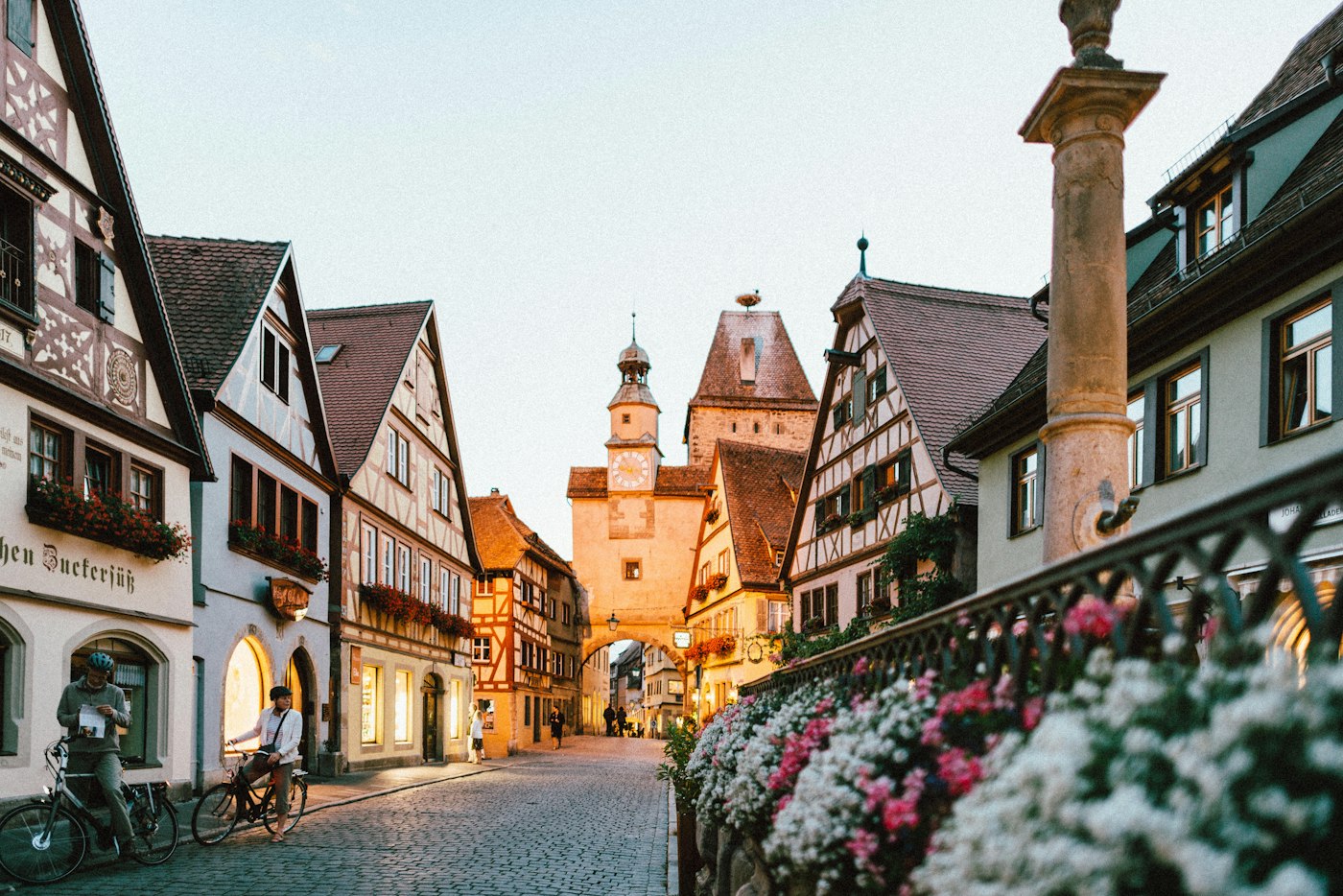
Since Brexit, British citizens are third-country nationals in Germany — the freedom of movement that once let you simply pack up and go is gone. The good news: Germany has one of the most welcoming skilled-migration systems in the world, and the EU Blue Card and reformed Skilled Immigration Act make it very achievable for professionals. Britons still enjoy one advantage: you can enter Germany visa-free for 90 days and apply for your residence permit from inside the country. This guide covers the visa routes, the famous Anmeldung, health insurance, banking and settling in.
1. Which visa do you need?
As a British passport holder you can travel to Germany without a visa for up to 90 days in any 180. To live and work, you need a residence permit (Aufenthaltstitel). Uniquely for "best-friend" nationalities (including the UK, US, Canada, Australia), you may apply for it at the local Ausländerbehörde after arriving, rather than at a German consulate in the UK first. Have a job or Blue Card offer lined up before you go.
EU Blue Card
GraduatesThe flagship route for university graduates with a job offer. In 2026 the general salary threshold is roughly €48,300/year (about €43,760 for shortage occupations and recent graduates). Fast track to permanent residence — as little as 21–27 months with German skills.
Skilled Worker visa
VocationalFor those with a recognised vocational or academic qualification and a job offer, but who don't meet the Blue Card salary. No fixed salary threshold if the qualification is recognised. Covers trades, IT, healthcare and more under the Skilled Immigration Act.
Opportunity Card (Chancenkarte)
Job seekersA points-based card that lets you move to Germany to look for work for up to one year, with permission to do trial and part-time jobs (up to 20 hrs/week). Points for qualifications, experience, age, language and German ties.
Freelance visa (Freiberufler)
Self-employedBerlin is famous for its freelance/artist visa. You show client interest, a business plan and enough income to support yourself. Popular with creatives, consultants, and tech contractors. Requires German health insurance and a local address.
Student visa
StudentsFor enrolment at a German university. Most public universities charge no tuition (just €150–350/semester). You must show ~€11,900/year in a blocked account (Sperrkonto). Work up to 140 full or 280 half days per year.
Family reunification
FamilyJoin a spouse or partner who already holds a German residence permit or is a German/EU citizen. Spouses generally need to show basic German (A1) unless joining a Blue Card holder, where the requirement is waived.
2. Documents to prepare in the UK
As a non-EU national now, your paperwork burden is heavier than before Brexit. Some German documents require an apostille (via the UK's Legalisation Office) and a certified German translation. Sort these in the UK — it's cheaper and faster than abroad.
Essential documents
- Passport — valid at least 6 months beyond your planned stay, with blank pages
- University degree(s) & transcripts — check recognition on anabin; you may need an apostille and translation
- Employment contract or job offer — required for Blue Card / Skilled Worker
- Birth certificate & marriage certificate — apostilled and translated (for family/registration)
- Proof of qualifications for regulated professions — recognition (Anerkennung) via the relevant German authority
- CV in German format (Lebenslauf) and references
- Proof of funds / blocked account — for Opportunity Card, student or freelance routes
- Passport photos (biometric) — German spec, for the residence permit
Apostille & recognition
Get apostilles from the UK Legalisation Office (FCDO). For degree recognition, search anabin — if your university and degree are listed as "H+" and equivalent, the process is simple. Regulated professions (medicine, nursing, law, teaching) use the Recognition in Germany portal.
3. Your first 30 days in Germany
The German admin chain is strict and order-dependent — each step unlocks the next. Here's the sequence:
You can't register without an address. Book a serviced flat, Airbnb or sublet where the host will sign the Wohnungsgeberbestätigung (landlord confirmation). Without it, no Anmeldung — and without Anmeldung, nothing else works.
Within 14 days of moving in, book a Bürgeramt appointment. Bring passport, Wohnungsgeberbestätigung and the Anmeldeformular. You'll get the Meldebescheinigung — required for the bank, tax ID and your residence permit.
Bürgeramt booking →As a UK national, apply at the local Ausländerbehörde (immigration office) after arrival. Book the appointment as early as possible — waits can exceed your 90-day visa-free window in big cities. Bring your Anmeldung, contract, insurance, biometric photos and fee.
After Anmeldung, your 11-digit Steuer-Identifikationsnummer arrives by post within 2–3 weeks. Your employer needs it to tax you at the correct class — without it you're taxed at the highest rate and refunded later.
With your Meldebescheinigung and passport, open at digital banks N26, C24 or DKB (English-friendly) or a local Sparkasse. A German IBAN is required for salary, rent and SEPA direct debits.
You need proof of German health cover for the residence permit. Employees join a public fund (GKV) like TK, AOK or Barmer; higher earners and freelancers may choose private (PKV). Your GHIC (UK card) only covers short tourist visits, not residency.
Techniker Krankenkasse →Providers: Telekom, Vodafone, O2 or discounters (Aldi Talk, Congstar). Prepaid from €10/month. For a permanent flat, set up electricity, internet and the €18.36/month broadcasting fee (Rundfunkbeitrag, mandatory per household).
4. Cost of living
For most Britons, Germany feels similar or slightly cheaper than the UK — rent in Berlin or Leipzig undercuts London dramatically, groceries are cheaper, and public transport is a bargain with the Deutschlandticket. Munich and Frankfurt are the pricey exceptions.
| City | 1-bed rent (centre) | Monthly budget (1 person) | Avg net salary |
|---|---|---|---|
| Munich (München) | €1,400–2,000/mo | €2,300–3,200/mo | €2,800–3,600/mo |
| Frankfurt | €1,200–1,700/mo | €2,000–2,800/mo | €2,700–3,500/mo |
| Berlin | €1,100–1,700/mo | €1,900–2,700/mo | €2,400–3,200/mo |
| Hamburg | €1,050–1,600/mo | €1,850–2,600/mo | €2,500–3,300/mo |
| Leipzig | €650–1,000/mo | €1,400–2,000/mo | €2,200–2,900/mo |
Monthly expense breakdown (Berlin, 1 person)
- Rent (1-bed, warm/incl. Nebenkosten): €1,100–1,600
- Health insurance (freelance GKV): €250–450 (employees: deducted at source)
- Groceries: €250–400
- Transport (Deutschlandticket): €58/month nationwide
- Eating out (occasional, mid-range): €150–250
- Mobile phone: €10–30
- Broadcasting fee (Rundfunkbeitrag): €18.36
5. Finding housing
Germany is a nation of renters, and the market in Munich, Berlin, Frankfurt and Hamburg is fiercely competitive. Viewings draw crowds; you'll need a complete application folder to stand out.
Where to search
- ImmobilienScout24 — the biggest portal for flats
- WG-Gesucht — best for flatshares (WG) and temporary sublets
- Kleinanzeigen — direct-from-landlord, fewer agent fees
- Immowelt and Immonet — extra coverage
- HousingAnywhere — book from the UK before you arrive
What landlords typically ask for
- SCHUFA credit report — new arrivals can offer a UK bank reference or employer letter until they build a SCHUFA
- Last 3 payslips or a job contract (income roughly 3x the cold rent)
- Copy of passport and residence permit / visa
- Meldebescheinigung (previous registration)
- Deposit (Kaution): usually 2–3 months' cold rent, held separately
Popular expat / affordable areas
- Berlin: Neukölln, Kreuzberg (lively, international), Wedding and Lichtenberg (cheaper)
- Munich: Sendling, Giesing, or S-Bahn commuter towns for value
- Frankfurt: Bockenheim, Bornheim, or nearby Offenbach
- Leipzig / Dresden: outstanding value if your work allows the east
6. Healthcare (GKV & PKV)
Germany's healthcare is excellent but works differently from the NHS: it's insurance-based and mandatory, not free at the point of use via general taxation. You must be insured to get (and keep) your residence permit.
Public insurance (GKV) — most employees
- Mandatory if employed and earning under ~€73,800/year (2026 threshold)
- Contribution ~14.6% + a fund supplement (~1.7% avg), split 50/50 with your employer
- Choose any fund — TK, AOK, Barmer, DAK; coverage is near-identical, service differs
- Non-working spouses and children are often co-insured for free (family insurance)
Private insurance (PKV)
Available to high earners, the self-employed and civil servants. Premiums are risk-based (age/health), not income-based, and can be cheaper when young but costly later. Switching back to GKV is difficult — take advice before opting out.
Finding a doctor
Register with a Hausarzt (GP) near you and book via Doctolib, filtering for English-speaking practitioners (common in cities). Your GHIC/EHIC only covers emergencies as a visitor, not residency — arrange German cover before you settle. Emergency number: 112.
7. Language & community
You can live in Berlin's international scene largely in English, but German unlocks the bureaucracy, better jobs, housing and real friendships — and it's required for permanent residence and citizenship. Aim for B1; even A2 makes daily life far smoother.
Learning German
- Goethe-Institut — recognised courses and certificates (branches in the UK too)
- Volkshochschule (VHS) — affordable community-college courses everywhere
- Apps: Babbel (Berlin-made), Deutsche Welle's free courses, and DeepL for translation
British & English-speaking community
- Large British and international communities in Berlin, Munich, Frankfurt and Hamburg
- InterNations and Meetup host expat and hobby events in every city
- Facebook groups like "Brits in Berlin" / "Brits in Germany" for practical tips and second-hand finds
- The British Embassy Berlin and consulates handle passports and consular support
Relocation is a mental adjustment as much as a logistical one — our Psychology & Wellbeing pillar covers culture shock and building a new social circle, and the IC360 community connects you with others who've made the UK-to-Germany leap.
8. Schools & education
School is compulsory from age 6 and public schools are free. Education is run at state (Bundesland) level, so rules and school types vary between, say, Bavaria and Berlin. Your children have full access as residents.
School types
- Grundschule (ages 6–10): primary, allocated by catchment
- Secondary tracks: Gymnasium (academic, to Abitur), Realschule, Hauptschule, or the combined Gesamtschule — the track chosen around age 10 matters
- Willkommensklassen: intensive German "welcome classes" ease newly arrived children in
- International / bilingual schools: British and IB curricula in big cities (fees €10,000–25,000/year) — popular for families wanting continuity with the UK system
Enrolment & university
Contact the local Schulamt with your Meldebescheinigung, child's birth certificate and measles-vaccination proof (Masernschutz is mandatory). Daycare (Kita) is subsidised but oversubscribed — apply early. For university, UK qualifications are recognised via anabin; post-Brexit, British students now pay the same low public-university fees but no longer get EU home-fee status elsewhere.
9. Culture & daily life
Britain and Germany are close neighbours but the daily norms differ. These are the contrasts Britons notice most:
Punctuality is non-negotiable
"On time" means a few minutes early. Trains, meetings and social plans run to the minute. British "fashionably late" reads as rude — text ahead if you'll be even five minutes behind.
Cash still matters
After tap-everywhere Britain, it's a shock: many bakeries, bars and even doctors are cash-only or prefer the local Girocard. Carry €50 and ask "Kann ich mit Karte zahlen?" before assuming contactless works.
Quiet hours (Ruhezeit)
No loud noise after 22:00, over lunch, and all day Sunday — no drilling, mowing or loud music. Sundays are for rest; shops close. Break the code and neighbours will (politely but firmly) let you know.
Recycling & Pfand
Separate glass, paper, plastic (gelber Sack) and bio waste meticulously. Bottles carry a deposit (Pfand) reclaimed at supermarket machines. It's more rigorous than UK kerbside recycling.
Directness over politeness
Germans skip the British hedging ("I wonder if you might possibly…") and just say it. Feedback is blunt, "no" means no, and it isn't personal. Drop the apologetic padding and be clear.
Paper & the post
Official Germany runs on physical letters, not email or apps. Tax ID, contracts and fines arrive by post — put your name on the letterbox or you won't receive them. Keep a paper file of everything.
Cycling & rail first
Cities are built for bikes and public transport. With the Deutschlandticket and proper cycle lanes, a car is often unnecessary. Watch for the bike lane when stepping off a tram — cyclists have priority.
Bread, beer & cold dinners
300+ breads, a bakery on every corner, and world-class beer at supermarket prices. Dinner (Abendbrot) is often cold — bread, cheese, cold cuts. You'll adapt faster than you'd expect.
Plan ahead, book ahead
Spontaneity gives way to appointments (Termine) for everything — doctors, offices, even some shops. Sundays are dead for errands. Buy groceries on Saturday and book your Termine early.
10. Supermarket guide
German supermarkets are cheaper than UK equivalents, with famously fast checkouts — bag at speed. Here's the landscape:
Main supermarket chains
- Aldi & Lidl — the discounters at home turf; unbeatable staple prices, good bakery and produce
- Rewe & Edeka — full-range supermarkets, wider and fresher choice, more international lines
- Penny & Netto — additional budget options
- dm & Rossmann — drugstores for toiletries, vitamins and baby goods (no food, but essential)
- Turkish / international grocers — cheap fresh veg and where you'll find British and world foods
Payment and habits
- Bring your own bags — plastic bags are charged and frowned upon
- Return bottles at the Pfand machine first, then use the coupon at the till
- Many discounters still favour Girocard or cash over credit cards
- Shops close early on Saturdays and are shut on Sundays — stock up Saturday. Exceptions: petrol stations and main-station shops
British products in Germany
Larger Rewe and Edeka stores have a "British/international" shelf (baked beans, HP sauce, Cheddar, tea). Online shops like British Corner Shop ship to Germany for the things you'll miss — though post-Brexit customs can add cost. Marmite and PG Tips travel well in a suitcase.
Food vocabulary cheat sheet
- Chicken = Hähnchen · Pork = Schweinefleisch · Beef = Rindfleisch · Fish = Fisch
- Milk = Milch · Butter = Butter · Cheese = Käse · Eggs = Eier · Bread = Brot
- Potato = Kartoffel · Onion = Zwiebel · Rice = Reis · Beans = Bohnen
- Sparkling water = Wasser mit Kohlensäure/Sprudel · Still = ohne Kohlensäure/still · Juice = Saft
11. Essential apps for life in Germany
Deutsche Bahn's app for trains, regional transport and the Deutschlandticket. Buy tickets, check live delays and platform changes. Your default for getting around Germany.
↗ bahn.deBook GP and specialist appointments online and filter by language to find English-speaking doctors. The standard way Germans manage medical care.
↗ doctolib.deDigital German bank with an English app — open an account in minutes with passport and Anmeldung. A German IBAN for salary, rent and SEPA direct debits, with instant notifications.
↗ n26.comGermany's classifieds (formerly eBay Kleinanzeigen) — furnish an unfurnished flat second-hand, find sublets, buy and sell. Essential for kitting out a new place on a budget.
↗ kleinanzeigen.deBest-in-class translator (built in Cologne) for decoding German letters, contracts and official forms with far better accuracy than generic tools — indispensable while your German develops.
↗ deepl.comMove money between UK and German accounts at the real GBP/EUR exchange rate — far cheaper than high-street banks. Useful while you keep UK ties, pay off UK bills or receive UK income.
↗ wise.comManaging money across the UK and Germany?
Our Finance pillar covers live GBP/EUR rates, FX alerts, the UK–Germany double taxation treaty and budgeting for your new salary.
Open Finance tools →Ready to plan your move to Germany?
Create your free IC360 account to get a personalised relocation plan, live FX alerts, your interactive Germany checklist and access to the expat community — all in one place.
Free forever · No credit card · Takes 2 minutes