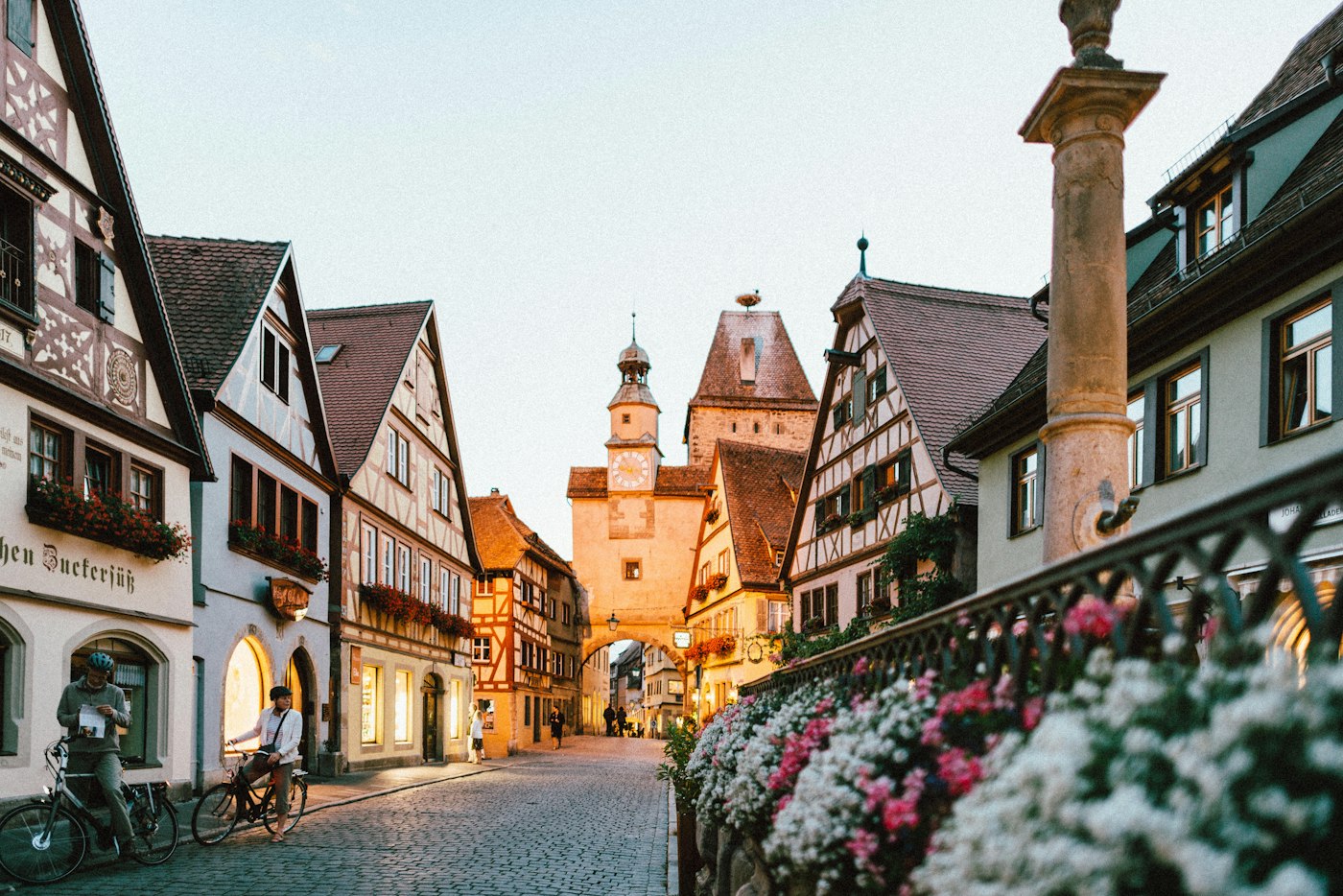
Every week, thousands of people planning a move to Germany ask the same questions — about visas, the mysterious Anmeldung, health insurance, Schufa, and why everything closes on Sundays. Here are the 30 most common ones, answered clearly and honestly. For the full step-by-step relocation walkthrough, see the IC360 Germany Country Path.
Visas & Residence
Do I need a visa to move to Germany?
EU/EEA and Swiss citizens need no visa at all. Citizens of Brazil, the USA, UK, Canada, Australia, Japan and a few other countries can enter visa-free for 90 days and apply for a residence permit from inside Germany at the local Ausländerbehörde. Most other nationalities must obtain a national (D) visa from a German embassy before travelling. Important: even if you can enter visa-free, you cannot work until you hold a permit with work rights. Official overview: make-it-in-germany.com.
What is the EU Blue Card and do I qualify?
The EU Blue Card is the premium residence permit for university graduates with a German job offer meeting a minimum gross salary threshold (adjusted yearly; lower for shortage occupations like IT, engineering and medicine — and IT specialists can qualify by experience without a degree). Perks: fast-track permanent residence in 21–27 months, easy family reunification, and mobility across the EU. Full details in our EU Blue Card guide; verify current thresholds at make-it-in-germany.com.
What is the Chancenkarte (Opportunity Card)?
Introduced in 2024, the Chancenkarte is a points-based permit that lets qualified professionals move to Germany for up to one year to look for a job — no offer needed. Points come from qualifications, German or English skills, work experience, age and Germany connections; you also need proof of funds (usually via a blocked account) and may work up to 20 hours/week while searching. See our full Chancenkarte guide.
How long does a German visa take to process?
Anywhere from a few weeks to several months, depending on the embassy, the visa type and appointment availability — the appointment wait is often the longest part. Employers can use the fast-track skilled-worker procedure (beschleunigtes Fachkräfteverfahren) to shorten timelines. Book your embassy slot the moment your documents are ready, and prepare apostilles and translations in parallel, not sequentially.
Can I bring my spouse and children?
Yes — family reunification covers spouses and minor children. Blue Card families get the easiest deal: no pre-arrival German requirement for the spouse and full, unrestricted work rights on arrival. For other permits, the spouse may need A1 German before the visa. Children enrol in (free) public school immediately, and you'll likely qualify for Kindergeld child benefit — €255/month per child in 2026.
How do I get permanent residence — and later citizenship?
The settlement permit (Niederlassungserlaubnis) standardly requires ~5 years of contributions, secure income and B1 German — but Blue Card holders qualify in 21–27 months and skilled-worker permit holders after 3 years. Citizenship is generally possible after 5 years of residence (3 with exceptional integration), and Germany now permits dual citizenship, which matters enormously for Brazilians and Americans who don't want to give up their passports. Track your own milestones with the IC360 visa tracker.
Anmeldung & Housing
What is the Anmeldung and why does everything depend on it?
The Anmeldung is the mandatory registration of your address at the Bürgeramt, normally within 14 days of moving in. It unlocks nearly everything else: your tax ID (mailed automatically after registering), traditional bank accounts, contracts, and residence permit appointments. You need your passport and the landlord's signed Wohnungsgeberbestätigung. In big cities, book the slot online the day you know your move-in date — appointments are scarce. Full walkthrough: Anmeldung complete guide.
How hard is it to find an apartment?
In Munich, Berlin, Frankfurt and Hamburg: hard. Dozens of applicants per listing and searches of 1–4 months are normal. Standard application dossier: proof of income (3 payslips or work contract), Schufa report, ID, and a short introduction. Most newcomers land first in furnished temporary housing (Wunderflats, HousingAnywhere) or flatshares (WG-Gesucht), then hunt for a permanent flat on ImmobilienScout24 from inside the country. Never pay a deposit before viewing — advance-payment "landlords abroad" are the classic scam.
What is Schufa and how do I get one as a newcomer?
Schufa is Germany's main credit bureau, and landlords almost always ask for a Schufa report. As a fresh arrival you won't have one — that's expected. Compensate with your work contract, payslips or savings proof, and once you have some account history, order the tenant version (Bonitätsauskunft) via meineschufa.de or free alternatives like bonify. An empty-but-clean record with good income documents is usually accepted.
What do Kaltmiete and Warmmiete mean — and what does renting really cost?
Kaltmiete = base rent. Warmmiete = base + building charges + heating; electricity and internet come on top. Rough 2026 ranges for a 1-bedroom: €700–1,000 warm in smaller cities, €1,200–2,000+ in Munich and central Berlin. Budget the deposit (up to 3 cold rents) plus first month upfront. Detailed city comparison in our Berlin vs São Paulo cost guide.
Can I get an apartment before arriving in Germany?
A permanent unfurnished flat from abroad is very difficult — landlords prefer candidates who view in person and have German paperwork. The proven strategy: book 1–3 months of furnished temporary housing from abroad (Wunderflats, HousingAnywhere — both designed for exactly this, with contracts valid for Anmeldung), then search for your permanent home after arrival. Make sure any temporary rental explicitly allows Anmeldung before booking.
Health Insurance & Healthcare
Is health insurance really mandatory?
Yes, for everyone living in Germany — and no residence permit is issued without proof of it. Employees are enrolled in public insurance (GKV) automatically via their employer, with contributions of roughly 14–17% of gross salary split employer/employee. Travel insurance only bridges the very first weeks. Full comparison in our German health insurance guide.
Public (GKV) or private (PKV) — which should I choose?
For most employees: public (TK, AOK, Barmer are popular choices, TK is expat-friendly with English service). Non-earning spouses and children are covered free in GKV — decisive for families. PKV can be cheaper for young, healthy, high-earning singles, but premiums rise with age and returning to GKV is hard. Freelancers should model both carefully before choosing — GKV charges the self-employed on total income.
How do I find an English-speaking doctor?
Use Doctolib — Germany's dominant booking platform — and filter doctors by spoken language (English, Portuguese, Spanish and more). Non-urgent medical advice: call 116 117. Emergencies: 112. With a GKV card, most visits cost nothing at the point of care. Pharmacies (Apotheke) are the first stop for minor issues and are everywhere.
What happens if I arrive before my insurance starts?
Use expat bridge insurance (e.g. incoming policies from providers like Feather, Getsafe, or Dr-Walter) to cover the gap between landing and your GKV activation — some consulates require proof of it for the visa itself. Don't stay uninsured: German healthcare without insurance is billed privately and gaps can create problems when joining GKV later.
Work & Career
Do I need German to find a job?
In tech, research and international startups — especially Berlin — English-only roles are real and plentiful. Everywhere else, expect B1–B2 German as a baseline, and full fluency for healthcare, public sector and client-facing roles. Even in English-speaking jobs, German accelerates promotions and makes daily life far easier. Strategy, job boards and CV formats in the IC360 Work & Career pillar.
Where do I look for jobs?
LinkedIn, StepStone, Indeed.de and Xing are the big four. English-speaking roles: Arbeitnow and Berlin Startup Jobs. The official Make it in Germany portal lists shortage occupations where visas are easiest. German CVs are tabular and concise — adapt yours before applying.
Will my foreign degree be recognised?
Check the anabin database first; if your university is rated H+ your degree is generally usable for visa purposes. Regulated professions (medicine, nursing, teaching, law) require formal recognition before practising — start via anerkennung-in-deutschland.de. For everything else, a ZAB Statement of Comparability is optional but strengthens applications.
Can I freelance in Germany?
Yes — Germany has a dedicated freelance visa path (Freiberufler for liberal professions, Gewerbe for trade businesses). You'll need client letters of intent, a financial plan, and health insurance sorted solo (the expensive part). Registration runs through the Finanzamt, which issues your freelance tax number. Full process in our Germany freelance visa guide.
Money, Banking & Taxes
Can I open a bank account without Anmeldung?
Yes — N26 and Wise can typically be opened with a foreign address before or right after arrival, which is why they're the standard first account. Traditional banks (Sparkasse, Deutsche Bank, Commerzbank) want your Anmeldung first. Common path: N26/Wise for the first weeks → salary lands → add a traditional bank if you need in-branch service. Comparison: Banking in Germany for foreigners.
How high are taxes really?
Progressive income tax of 14–45% plus social insurance (pension, health, unemployment, care) means a single employee typically takes home ~55–65% of gross. Married couples can optimise via tax classes (Steuerklasse 3/5 or 4/4). Most employees benefit from filing an annual return — average refunds are meaningful. Details, DTA rules for Brazilians and calculators: German tax guide for expats and the Finance pillar.
What is the Steuer-ID and when do I get it?
Your lifetime 11-digit tax ID arrives by post automatically 2–4 weeks after your first Anmeldung. Your employer needs it — without it you're temporarily taxed at the maximum rate (refunded once submitted). Lost or delayed? Request it at the Finanzamt or via the BZSt.
What's the cheapest way to transfer money internationally?
Never wire through a traditional bank for regular transfers — exchange-rate markups eat 2–5%. Wise offers near mid-market rates for most corridors; for the Brazil route specifically, Remessa Online and Nomad compete hard. Always compare the amount received, not the advertised fee. Full comparison: Best money transfer Brazil ↔ Europe. Set FX rate alerts in the IC360 Finance pillar.
What salary do I need to live comfortably?
Rough single-person guide for 2026: comfortable from ~€2,500–3,000 net/month in Munich or Frankfurt, ~€2,000–2,500 in mid-size cities. Since taxes take 35–45% of gross, always convert offers with a Brutto-Netto calculator before comparing to your current salary. Families need to add rent for bigger flats — the dominant variable — and Kita fees (free in Berlin, paid elsewhere).
Language & Integration
How much German do I need — really?
Honest tiers: A2 = daily survival. B1 = bureaucracy alone, permanent residence eligibility, real conversations. B2 = most German-speaking jobs and actual social integration. You can start with English in Berlin's bubble, but treat it as a bridge. Flashcards, courses and an AI conversation coach live in the IC360 Language pillar.
What's the cheapest way to learn German fast?
The BAMF-subsidised Integrationskurs (~700 hours to B1) is the best value if you qualify — often just a few euros per lesson. Next: Volkshochschule (community college) evening courses in every city. Combine a weekly course with daily app practice (Anki flashcards, Babbel) and language tandems (Tandem app, or a local Stammtisch). Consistency beats intensity: 30 minutes daily outperforms weekend marathons.
Is it easy to make friends in Germany?
German friendship culture is slow-burn: reserved at first, deeply loyal once formed. Don't misread initial distance as rejection. The reliable path is recurring groups — a Verein (club; Germany has one for everything), sports team, choir or language course — where the same people see you weekly. Our expat loneliness guide has the full 90-day playbook, and the IC360 community connects you with people on your exact route.
Daily Life
What's the deal with Sundays?
Nearly all shops, including supermarkets, are legally closed on Sundays and public holidays (Sonntagsruhe). Exceptions: bakeries (mornings), petrol stations, train-station shops, restaurants and cafés. Quiet rules also apply — no drilling, mowing or loud music. Do your shopping Saturday, then do as the Germans do: forest walk, lake, cake.
Do I need cash?
Less than the stereotype says, but yes: many bakeries, kiosks, small restaurants and markets remain cash-only or card-grumpy. Keep €50–100 on hand. Note that Girocard (EC) is the dominant scheme — some places take Girocard but not credit cards. Supermarket guide with payment tips: see the supermarket section of the Germany Country Path.
What is the Rundfunkbeitrag letter I received?
The public-broadcasting fee: €18.36/month per household (2026), mandatory whether or not you own a TV. The letter arrives automatically after your Anmeldung. Flatmates share one payment — if someone in your WG already pays, respond with their contribution number instead of registering again. Don't ignore the letters; enforcement is real. Official info: rundfunkbeitrag.de.
Can I drive with my foreign licence — and do I need a car?
EU licences: valid forever. Most others (Brazil, US): valid 6 months after residence starts, then conversion (Umschreibung) is required — automatic for some countries/US states, exams for others, so start early. But check whether you need a car at all: the €58/month Deutschlandticket covers all local and regional public transport nationwide, and most city-dwellers live happily car-free.
What should I do in my first week?
In order: (1) SIM card; (2) book the Anmeldung slot immediately — scarcest resource; (3) open N26/Wise; (4) activate health insurance; (5) buy the Deutschlandticket; (6) then handle what arrives by post — tax ID, Rundfunkbeitrag. The Germany Country Path has a full First-7-Days section, and the pre-departure checklist covers everything to do before you fly.
Is Germany a good place to move with a family?
One of the best in Europe on paper: free public schools, €255/month Kindergeld per child, generous parental leave, children covered free in public health insurance, safe cities, superb playgrounds. The two real pain points: Kita (daycare) waiting lists — register the moment you know your address, even pre-birth in big cities — and finding family-sized apartments. School enrolment is straightforward through your local Schulamt after Anmeldung.
Got your answer? Now get your plan.
Create your free IC360 account for a personalised Germany relocation checklist, live FX alerts, visa tracking, and a community of people moving on your exact route.
Free forever · No credit card · Takes 2 minutes