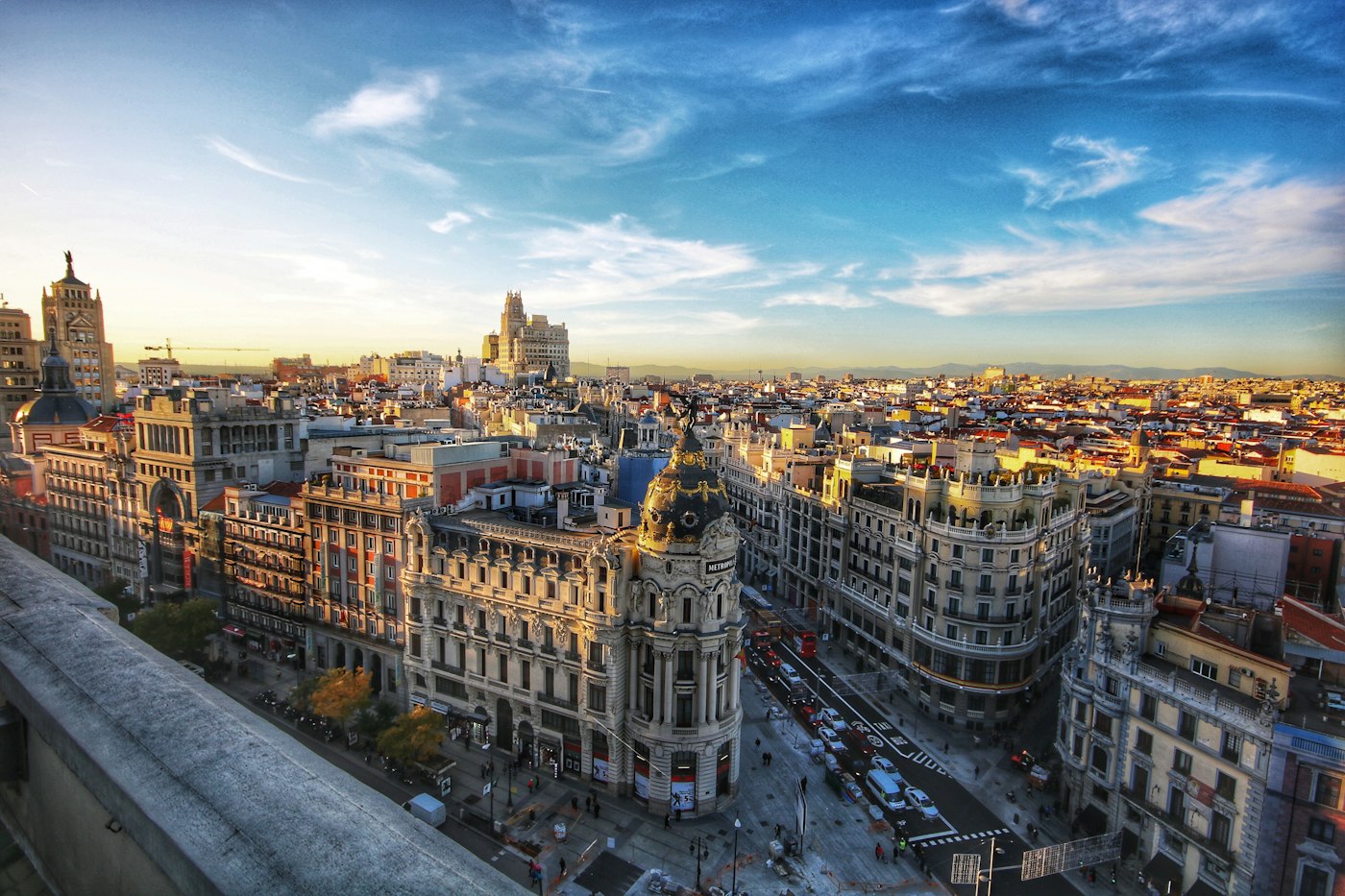
Madrid has become one of southern Europe's most attractive relocation destinations — a genuine capital-city job market, a much lower cost of living than London or Amsterdam, and a language (Spanish) that's noticeably faster to pick up for Portuguese speakers than German or Dutch. It's also a city with real bureaucratic hurdles: the empadronamiento (municipal registration) and NIE (foreigner ID number) processes are non-negotiable first steps, unemployment runs structurally higher than in northern Europe, and salaries — while rising — still trail Germany or the UK for comparable roles. This guide covers what things actually cost in 2026, which barrio fits your budget, and the bureaucratic sequence that gets you functioning in your first weeks.
1. Why Madrid (and why not)
The case for: a genuinely lower cost of living than most Western European capitals, 300+ days of sunshine a year, a public healthcare system (Sanidad) that's free once you're registered as a resident or employee, excellent public transport, and a linguistic and cultural proximity that Portuguese and other Romance-language speakers adapt to faster than almost anywhere else in Europe. Madrid's tech and remote-work scene has grown quickly, aided by Spain's digital nomad visa and a large, established Latin American community that softens the adjustment considerably.
The honest counterpoints: Spanish unemployment, while much improved, still runs structurally higher than in Germany or the Netherlands, and salaries for equivalent roles are typically 20–35% lower than northern Europe. Bureaucracy (empadronamiento, NIE, Seguridad Social registration) is genuinely slow and appointment-dependent — book online appointments (citas previas) weeks in advance. Housing supply in central barrios has tightened noticeably in recent years, pushing rents up faster than wages. If salary is the deciding factor, compare against Germany or the Netherlands on the IC360 Community.
2. Barrios: finding your area
Madrid's barrios (neighborhoods) vary enormously in price and character. Rents below are typical for a 1-bedroom apartment on a new contract, unfurnished or part-furnished.
Malasaña
Young & creativeMadrid's hipster heart — vintage shops, indie bars, and a dense concentration of young professionals and remote workers.
Chueca
LGBTQ+ & nightlifeCentral, walkable, and Madrid's historic LGBTQ+ hub, with a lively bar and restaurant scene at every hour.
Salamanca
UpscaleMadrid's most exclusive district — designer boutiques, wide elegant avenues, and a settled, high-income resident base.
Chamberí
Professional & residentialA favorite among relocating professionals — leafy, well-connected, and quieter than Malasaña while still central.
La Latina
Traditional & tapasHistoric, atmospheric streets, and the city's best-known tapas and vermouth scene, especially around Sunday's El Rastro market.
Lavapiés
Diverse & affordableMadrid's most multicultural barrio — a strong Latin American and North African presence, and the best value close to the center.
3. Cost of living: a realistic Madrid budget
| Item | Monthly cost | Notes |
|---|---|---|
| Rent (1-bed, central) | €1,100–1,900 | Outer barrios and Metro-connected suburbs noticeably cheaper |
| Abono Transporte (public transport) | €54.60 (under 26: €20) | Unlimited Metro, bus and Cercanías within Madrid zone A |
| Groceries | €200–320 | Mercadona/Carrefour/Día, single person |
| Phone + internet | €35–55 | Among the cheapest in Western Europe |
| Private health insurance (if not employed) | €50–110 | Sanitas, Adeslas, DKV — optional but common |
| Eating out / social life | €150–300 | Menú del día lunch deals keep costs down |
| Realistic single total | €1,600–2,400 | Meaningfully below London, Amsterdam or Munich |
Madrid salaries: finance/consulting €35,000–65,000, tech €30,000–55,000, entry-level/graduate roles from ~€20,000–26,000 — noticeably below northern Europe, but offset by the lower cost of living. Model your specific after-tax budget on our Finance pillar.
4. Finding housing
Renting in Madrid typically requires proof of income (often 2.5–3x the rent), a Spanish bank account, and increasingly a nómina (payslip) or employment contract — harder to produce in your first weeks.
Tactics that actually work
- Book 2–4 weeks of temporary accommodation (Airbnb, or short-let platforms like Spotahome) to search in person and open a bank account before signing a long lease.
- Prepare your file: passport/NIE, employment contract or offer letter, recent payslips or bank statements, and be ready to offer 1–2 months' deposit plus 1 month's rent in advance (fianza).
- Use a guarantor or bank guarantee (aval bancario) if you lack Spanish income history — many landlords accept this in lieu of a local guarantor.
- Search on Idealista, Fotocasa and pisos.com — Idealista is by far the dominant platform; set alerts and respond within minutes for popular listings.
- Know your rights: standard contracts (Ley de Arrendamientos Urbanos) run 5 years minimum for individual landlords, with the tenant able to exit after 6 months with notice — the deposit is capped at 1 month by law, though landlords often request additional months as an informal guarantee.
⚠️ Never pay a deposit before viewing in person or via verified video call. Fake listings targeting newcomers searching from abroad are common on classifieds sites — always verify the landlord's identity and property ownership before transferring money.
5. Getting around: the Metro and beyond
- Abono Transporte — a single travel card covering Metro, EMT buses, and Cercanías commuter rail within Madrid's zone system; the under-26 rate is a genuine bargain.
- Metro de Madrid — one of Europe's most extensive networks (13 lines), fast, frequent and reliable.
- Cercanías — regional trains connecting Madrid to satellite towns and the airport.
- EMT buses — dense coverage, especially useful for routes the Metro doesn't reach directly.
- BiciMAD — city bike-share scheme, useful for short central hops.
- Madrid-Barajas Airport (MAD) — connected via Metro Line 8 (~30–40 min to center) or Cercanías/bus.
6. Healthcare: public Sanidad and private options
Spain's public healthcare system (Sistema Nacional de Salud) provides free or low-cost care to residents registered with Social Security — a major advantage once you're set up, but the registration sequence matters.
- Empadronamiento first — registering at your local ayuntamiento (town hall) is the gateway to nearly everything else, including healthcare access and school enrollment; book your cita previa (appointment) online as early as possible.
- NIE (Número de Identidad de Extranjero) — your foreigner ID number, required for employment, banking, and most official processes; apply at a police station (Comisaría) or Spanish consulate before arrival if possible.
- Public healthcare (Sanidad) — once employed and registered with Seguridad Social, you and your dependents get a tarjeta sanitaria for free public healthcare; self-employed (autónomos) also qualify by paying social security contributions.
- Private insurance — many expats carry private plans (Sanitas, Adeslas, DKV) for shorter wait times and English-speaking doctors, especially before public coverage kicks in.
- Mental health — our Psychology pillar lists relocation-specialized, Portuguese and Spanish-speaking psychologists you can book directly.
- Emergencies — dial 112.
7. Jobs & industry
Madrid is Spain's political and financial capital, home to the Bolsa de Madrid stock exchange, major banks (Santander, BBVA), and a fast-growing tech and startup ecosystem clustered around areas like Chamberí and the wider metro region.
- Where to look: LinkedIn, InfoJobs (Spain's largest local job board), and Landing.jobs for tech roles.
- Salary reality: finance/consulting €35,000–65,000, tech €30,000–55,000 — meaningfully below Germany, UK or Netherlands, though partly offset by lower living costs.
- Digital Nomad Visa — Spain's remote-work visa lets non-EU nationals live in Madrid while working for a foreign employer, with a reduced tax rate for qualifying newcomers (Beckham Law regime).
- Check visa options for your nationality in our route guides and the Work & Career pillar.
8. Language & community
Spanish is essential for daily life beyond the most international workplaces — but for Portuguese speakers and other Romance-language natives, the learning curve is noticeably shorter than for Germanic or Slavic languages.
- Latin American community — large and well-established across the city, particularly strong in Lavapiés and Usera, with countless Latin American restaurants, shops and cultural associations.
- Brazilian community — smaller than in Portugal but growing, especially among tech and remote workers drawn by the linguistic proximity and digital nomad visa.
- Late schedule — lunch around 2–3pm, dinner rarely before 9–10pm; adjusting your body clock takes a few weeks but becomes second nature.
- Meetup and language exchange groups — very active, especially around Malasaña and Chueca's bar scene, a good way to practice Spanish informally.
- The IC360 Community — connect with others moving to Madrid on your exact route before you land.
9. Schools & education
- Colegios públicos — free public schools, enrollment tied to your empadronamiento address; a strong option once you're settled.
- Colegios concertados — semi-private, state-subsidized schools with modest fees, a distinctly Spanish middle option between public and fully private.
- Colegios privados / international schools — British Council School, American School of Madrid, and various other national-curriculum schools serve relocating families, typically €8,000–18,000+/year.
- Guarderías (nurseries) — public and private options exist; public nursery places are subsidized but competitive — apply as early as possible after registering your address.
10. Culture & daily life: Madrid specifics
The siesta is mostly a myth (in Madrid)
Most offices and shops in central Madrid stay open through the afternoon — the real cultural shift is the late lunch and even later dinner, not an afternoon nap.
Dinner starts late
Restaurants often don't fill up until 9:30–10pm; showing up at 7pm for dinner will mean eating alone in an empty restaurant.
Tapas is a social ritual, not just food
Sharing small plates while standing at a bar is the default social format — ordering one large individual dish is unusual in most tapas bars.
Tipping is modest and optional
Rounding up or leaving small change is appreciated but never expected — nowhere near the pressure of US or UK tipping culture.
Directness and volume are normal
Spanish conversation style is warmer and louder than in northern Europe — interruptions during animated conversation aren't rude, they're enthusiasm.
August empties out
Many locals leave the city for the coast in August; some small businesses close entirely — plan bureaucratic errands and appointments around this.
11. Essential Madrid apps
Official app for Metro, bus and Cercanías routes with live schedules and service alerts.
↗ metromadrid.esSpain's instant peer-to-peer payment system, linked directly to your bank account — used constantly for splitting bills.
↗ bizum.esBook private doctor appointments and video consultations — commonly used to bridge the wait before public healthcare activates.
↗ sanitas.esBook empadronamiento, NIE and Social Security appointments — essential and often the biggest bottleneck in your first month.
↗ administracionespublicas.gob.esSpain's dominant property portal for renting and buying — set alerts and respond fast in competitive central barrios.
↗ idealista.comMid-market currency exchange for moving savings into EUR — pair it with FX rate alerts on the IC360 Finance pillar.
↗ wise.comReady to make Madrid home?
Create your free IC360 account to get a personalised relocation plan, live FX alerts, your interactive Spain checklist and access to the Madrid expat community — all in one place.
Free forever · No credit card · Takes 2 minutes