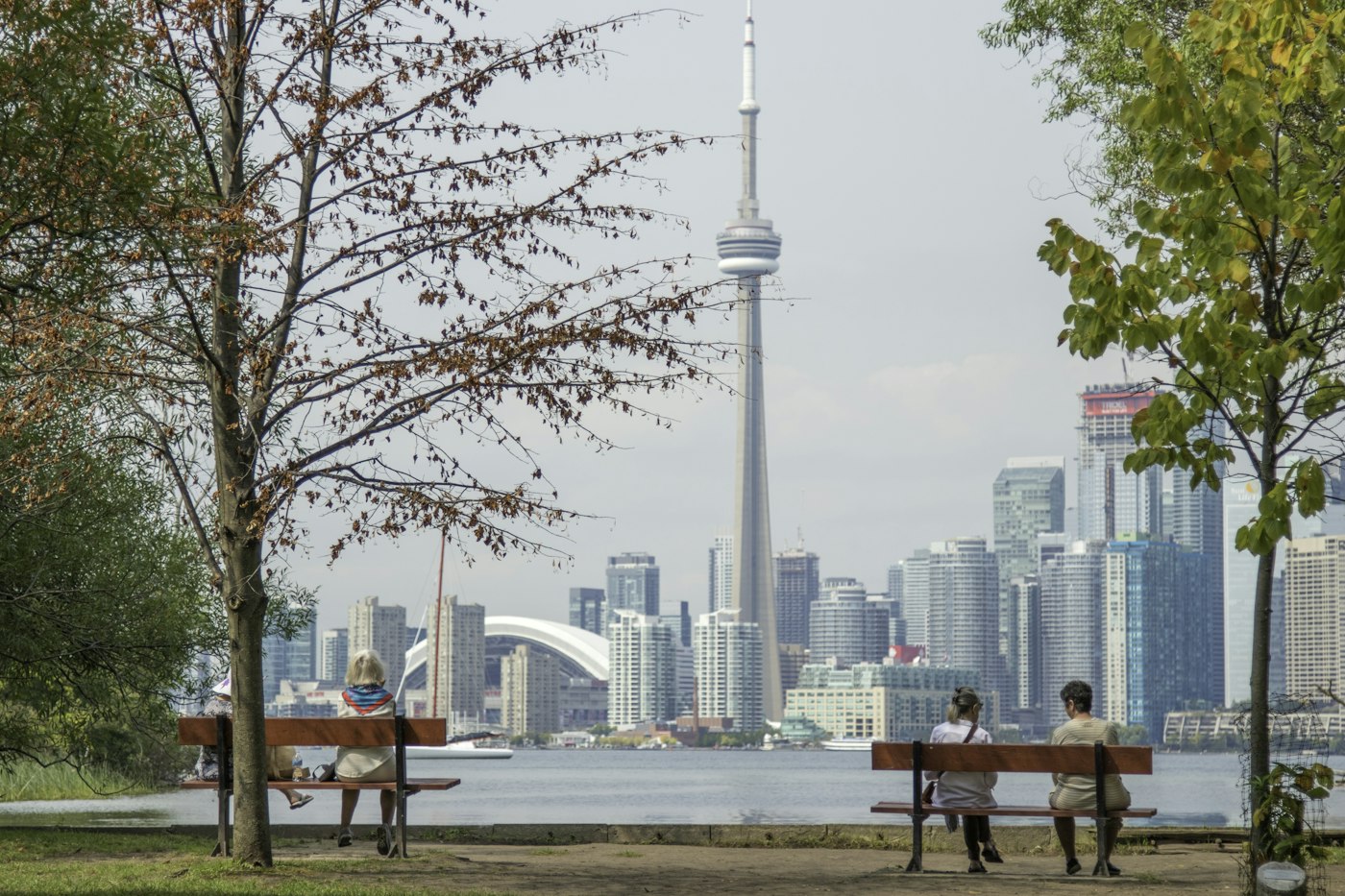
Toronto is routinely ranked among the most diverse cities on earth — more than half its residents were born outside Canada, and over 200 languages are spoken across the Greater Toronto Area. For newcomers, that means an established community from almost anywhere, a genuinely welcoming immigration culture, and a job market anchored by Bay Street's banks and a fast-growing tech sector. It also means real trade-offs: rent has climbed sharply over the past decade, provincial health coverage (OHIP) has a three-month waiting period newcomers must plan around, and winters are long, dark and genuinely cold. This guide covers what things actually cost in 2026, which neighborhood fits your budget, and the practical sequence — SIN, OHIP, banking, TTC — that gets you functioning in your first weeks.
1. Why Toronto (and why not)
The case for: Canada's largest and most economically dynamic city, a genuinely multicultural population where being a newcomer is the norm rather than the exception, a strong and growing job market in finance, technology and healthcare, a clear and points-based immigration system (Express Entry, PNP), and universal healthcare once you clear the OHIP waiting period. English is the primary working language across the city (French dominates Quebec, not Ontario), which removes one layer of adjustment for English speakers.
The honest counterpoints: rent has risen faster than wages for much of the last decade, and a 1-bedroom downtown now runs CAD $2,000–2,800/month. The first three months in Canada come with no provincial health coverage — you need private bridge insurance, and skipping it is a real financial risk. Winters run roughly November to March with regular sub-zero temperatures and snow; the psychological adjustment (shorter days, less sunlight) catches many newcomers off guard. If the immigration points system feels like a barrier, compare it against other Canadian entry routes on our Canada Country Path or explore the Brazil→Canada route guide.
2. Neighborhoods: finding your area
Toronto's neighborhoods vary enormously in price, vibe and commute. Rents below are typical for a 1-bedroom apartment on a new lease, unfurnished.
Downtown Core / Financial District
Finance professionalsBay Street's bank towers, the PATH underground walkway system, and the shortest possible commute if you work in finance — dense, vertical, and walkable.
Liberty Village
Young professional & techConverted factory buildings turned loft-style condos, a strong tech and startup crowd, and easy streetcar access downtown.
The Annex
Academic & leafyNext to the University of Toronto, tree-lined Victorian streets, indie bookshops and a mixed student/professional population.
Leslieville / Riverdale
Family & creativeEast-end residential streets, a strong café and brunch scene, and one of the city's favorite areas for young families relocating.
North York
Diverse & valueA major secondary downtown with large East Asian and South Asian communities, more space for the money, and a direct subway line to the core.
Little Portugal / Dundas West
Portuguese & Brazilian communityHistoric Portuguese heartland with a growing Brazilian presence, bakeries, churrascarias and a genuinely walkable west-end strip.
3. Cost of living: a realistic Toronto budget
| Item | Monthly cost (CAD) | Notes |
|---|---|---|
| Rent (1-bed, central) | $2,000–2,800 | Outer areas (Scarborough, Etobicoke) 20–30% cheaper |
| TTC transit pass | $156 | Presto card, unlimited monthly |
| Groceries | $350–500 | Loblaws/No Frills/Metro, single person |
| Phone + internet | $110–150 | Canadian telecom prices run high vs Europe |
| Bridge health insurance (first 3 months) | $80–150 | Required before OHIP activates — see Healthcare section |
| Utilities (hydro, heat) | $100–180 | Higher Nov–Mar with heating |
| Eating out / social life | $250–400 | Tipping culture (15–20%) adds up fast |
| Realistic single total | $3,000–4,200 | Before income tax (federal + Ontario provincial) |
Toronto salaries: finance/banking roles CAD $65,000–140,000+, tech roles $70,000–130,000, entry-level/graduate roles from ~$45,000–55,000. Canada's combined federal + Ontario tax brackets are progressive and noticeably higher than US rates — model your after-tax budget on our Finance pillar.
4. Finding housing
Toronto's rental market is competitive, especially near downtown and subway lines. Landlords typically ask for proof of income (2–3x rent), a credit check, and references — all harder to produce without Canadian credit history.
Tactics that actually work
- Book 2–3 weeks of short-term accommodation (Airbnb or a corporate short-let) to search in person — Toronto landlords strongly prefer in-person viewings and same-week move-ins.
- Build a rental package: passport/work permit, employment letter or offer, recent pay stubs or bank statements showing 3+ months of income, and references if available.
- Offer a larger deposit (last month's rent is legally required in Ontario; first month's rent is also standard) to offset the lack of Canadian credit history.
- Search on Rentals.ca, Kijiji, PadMapper and Facebook Marketplace — Kijiji is the dominant local classifieds site for direct-from-landlord listings, often with lower fees than agent-listed units.
- Know Ontario's rent rules: most units built before November 2018 are subject to rent control (annual increase guideline); newer buildings are exempt — always ask when the building was built.
⚠️ Avoid off-platform wire transfers: a common newcomer scam involves "landlords" abroad asking for a deposit via wire transfer before you've viewed the unit in person. Never send money before an in-person or verified video viewing and a signed lease.
5. Getting around: the TTC and beyond
- Presto card — tap-in fare card for the TTC subway, streetcars and buses, plus GO Transit regional rail; load funds via app or at stations.
- TTC subway — 4 lines covering the core and northern suburbs; frequent on weekdays, less so late nights and weekends.
- Streetcars — iconic red streetcars cover key east-west and north-south corridors downtown, especially useful in areas without subway coverage.
- GO Transit — regional rail and bus network connecting Toronto to the wider Greater Toronto Area (GTA) suburbs and commuter towns.
- Driving — most downtown residents don't own a car; parking is expensive and traffic on the Gardiner/DVP highways is notoriously bad during rush hour.
- Pearson Airport (YYZ) — connected via the UP Express train (~25 min to Union Station) or TTC bus/subway combination.
6. Healthcare & the OHIP waiting period
Ontario's public health plan, OHIP (Ontario Health Insurance Plan), covers most medically necessary care at no direct cost — but new permanent residents and many work-permit holders face a three-month waiting period before OHIP coverage activates.
⚠️ Buy bridge insurance before you land. Without it, an ER visit, an ambulance ride or a broken bone in your first 90 days can cost thousands of dollars out of pocket. Providers like Manulife, Sun Life or GMS offer visitor/newcomer plans specifically for this gap.
- Apply for OHIP at a ServiceOntario location as soon as you're eligible — you'll need proof of Ontario residency (lease, utility bill) and immigration documents.
- Find a family doctor — Ontario has a shortage; many newcomers start with walk-in clinics or telehealth (Ontario's Health811 service) while waiting for a family physician.
- What OHIP doesn't cover — dental, vision, and prescription drugs (outside hospital) usually require employer benefits or private top-up insurance.
- Mental health — our Psychology pillar connects you with relocation-specialized, Portuguese and Spanish-speaking psychologists who understand the immigration adjustment specifically.
- Emergencies — dial 911; Telehealth Ontario (811) for non-emergency medical advice.
7. Jobs & industry
Toronto is Canada's financial capital — Bay Street houses the "Big Five" banks (RBC, TD, Scotiabank, BMO, CIBC) — and has become North America's third-largest tech hub after Silicon Valley and New York.
- Where to look: LinkedIn, Indeed Canada, and the Ontario government's Job Bank for regulated/verified postings.
- Salary reality: finance/banking $65,000–140,000+, tech $70,000–130,000, healthcare and skilled trades in high demand province-wide.
- Social Insurance Number (SIN) — apply immediately on arrival via Service Canada; you cannot legally be paid without one.
- Credential recognition — regulated professions (engineering, nursing, law, accounting) require provincial licensing bodies to assess foreign credentials, which can take months — start this process before you land if possible.
- Check your specific visa pathway on the Canada Country Path or the Work & Career pillar.
8. Language & community
English dominates daily life in Toronto (French is mandatory on federal packaging but rarely spoken locally). What sets Toronto apart is scale and normalization of diversity — over half the population was born abroad, so being a newcomer carries little social friction.
- Brazilian & Portuguese community — concentrated in Little Portugal/Dundas West and growing steadily in North York and Mississauga, with Brazilian grocery stores, churrascarias and community associations.
- Settlement agencies — organizations like COSTI and various city-funded newcomer centers offer free settlement counselling, English classes and job-search help, regardless of immigration status.
- Canadian politeness norms — genuine, not performative; holding doors, thanking transit drivers, and apologizing reflexively are all normal.
- Meetup and cultural associations — very active for virtually every nationality; a fast way to build a social circle beyond the workplace.
- The IC360 Community — connect with others moving to Toronto on your exact route before you land.
9. Schools & education
- Public schools — free for residents through the Toronto District School Board (TDSB); enrollment is by catchment area tied to your address.
- French immersion — widely available in public schools and popular even among non-French-speaking families for the bilingual advantage.
- Private/independent schools — CAD $20,000–45,000+/year, with options ranging from religious schools to elite university-prep academies.
- International schools — options serving specific curricula exist but are less common than in London or Amsterdam; most relocating families use the strong public system instead.
- Childcare — expensive and in short supply; Ontario's subsidized childcare program (aiming for CAD $10/day) is being rolled out but wait lists remain long — register as early as possible.
10. Culture & winter survival
Winter is a genuine adjustment
Roughly November to March with regular sub-zero days and early sunsets. Invest in a proper winter coat, boots and layers — this is not optional.
"Sorry" is a reflex, not an apology
Canadians say sorry constantly — bumping into someone, asking a question, even when someone else is at fault. It's social lubricant, not literal.
Tipping is expected, not optional
15–20% at restaurants and for services is the norm; payment terminals now prompt tip percentages by default — factor this into your dining budget.
Multiculturalism is policy, not just demographics
Canada's official multiculturalism policy actively encourages retaining your heritage rather than assimilating — cultural festivals and diaspora associations are mainstream, not niche.
Hockey is a genuine cultural touchstone
The Toronto Maple Leafs matter socially even to casual fans — knowing basic hockey small talk helps in workplace and social settings, especially in winter.
The PATH exists for a reason
Toronto's underground PATH network lets you walk between dozens of downtown buildings without stepping outside — genuinely useful, not a gimmick, in January.
11. Essential Toronto apps
Real-time TTC subway, streetcar and bus arrivals, plus GO Transit and regional connections in one map.
↗ transitapp.comCanada's default peer-to-peer payment method, built into virtually every bank's app — used for splitting rent, bills and everyday transfers.
↗ interac.caBook OHIP, driver's license and health card appointments and check application status directly.
↗ ontario.caCanada's most trusted forecast app — essential for winter storm and wind-chill planning.
↗ theweathernetwork.comCanada's dominant classifieds site — apartments, furniture, and secondhand goods for setting up your first home.
↗ kijiji.caMid-market currency exchange for moving savings into CAD — pair it with FX rate alerts on the IC360 Finance pillar.
↗ wise.comReady to make Toronto home?
Create your free IC360 account to get a personalised relocation plan, live FX alerts, your interactive Canada checklist and access to the Toronto expat community — all in one place.
Free forever · No credit card · Takes 2 minutes