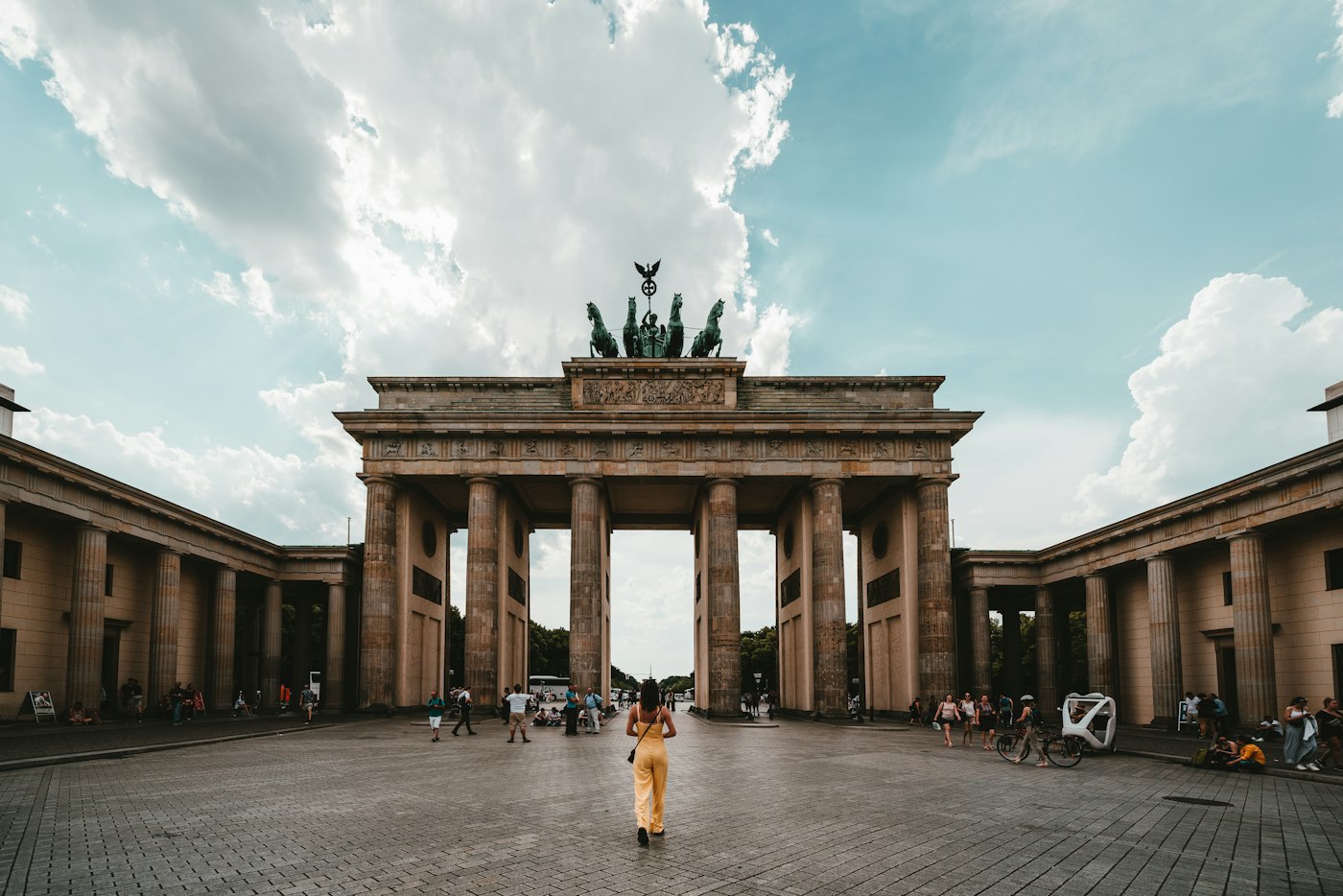
Around 120,000 Americans already call Germany home, and the number keeps growing — drawn by job security, universal healthcare, tuition-free universities and six weeks of paid vacation a year. The good news for US citizens: you're one of the few "privileged nationalities" who can enter Germany visa-free and sort out the residence permit after arriving. The less good news: German bureaucracy runs on paper, appointments and patience. This guide walks you through the entire journey, from choosing a visa in the US to buying groceries on your first Saturday (never Sunday — everything is closed).
1. Which visa or permit do you need?
As a US citizen you can enter Germany without a visa and stay up to 90 days. Crucially, the USA is on the privileged list (§41 AufenthV), which means you can apply for your residence permit at the local immigration office (Ausländerbehörde) from inside Germany — no need to apply at a German consulate first, though doing so from the US often means shorter waiting times. You may not work until the permit (or at least a Fiktionsbescheinigung) is issued.
EU Blue Card
Best for professionalsFor university graduates with a German job offer above the annual salary threshold (around €48,000–49,000 in 2026; lower for shortage occupations like IT, engineering and medicine — verify the current figure). Fast track to permanent residency in 21–27 months.
Skilled Worker Permit (§18a/18b)
Job offer, any salaryFor qualified professionals with a recognized degree or vocational training and a concrete job offer — no minimum salary threshold like the Blue Card. Your qualification must be recognized as comparable to a German one.
Chancenkarte (Opportunity Card)
No job offer yetPoints-based job-seeker permit: move to Germany for up to 12 months to look for work (extendable). Points for qualifications, experience, age and language. You can work part-time (up to 20 hrs/week) while searching.
Freelance Visa (Freiberufler)
Popular with AmericansFor self-employed professionals in liberal professions — writers, designers, developers, consultants, artists. Berlin issues thousands of these. You'll need client letters of intent, a financing plan and proof of health insurance.
Student Visa / Permit
Tuition-free unisPublic universities charge no tuition (just a ~€150–350 semester fee) — a radical change from US college costs. Requires admission plus proof of funds (blocked account of ~€11,900/year — amount updated annually).
Family Reunification
Spouses & childrenSpouses and minor children of permit holders can join with full work rights. Spouses of Blue Card holders don't need to prove German language skills. Same-sex marriages are fully recognized.
💡 Apply from the US or from Germany? Applying at a German consulate in the US (Washington, New York, Chicago, San Francisco, Houston, Boston, Atlanta, Miami or Los Angeles) usually means you arrive with everything settled and can start work immediately. Applying inside Germany is possible but big-city immigration offices (especially Berlin's LEA) can take months to give you an appointment — plan a financial buffer for that gap.
2. Documents to prepare before leaving the US
Germany loves certified paperwork. Preparing these documents while you're still in the US will save you weeks of transatlantic courier stress later.
- Passport — valid at least 6 months beyond your planned arrival, with free pages.
- Apostilled birth certificate — order a certified copy from your state's vital records office, then get the apostille from the same state's Secretary of State. Needed for marriage, family reunification and some registrations.
- Apostilled marriage certificate — same process, from the state where you married.
- FBI background check (Identity History Summary) — required for some permits and professional licenses; apostilled by the US Department of State since it's a federal document.
- University diplomas & transcripts — check if your degree is listed in the anabin database. If not, request a Statement of Comparability from the ZAB (~€200, 2–3 months).
- Certified translations — German authorities require translations by court-sworn translators. Cheaper to do in Germany than in the US (€30–80 per page).
- Driver's license — Germany has reciprocity with many US states. Full-exchange states (e.g., most of them, including Texas, Washington, Colorado) swap without tests; partial-exchange states (e.g., Florida, New York in part) require a theory and/or practical exam. Check the ADAC state-by-state list. You must convert within 6 months of registering.
- Vaccination & medical records — bring immunization records and a supply of prescriptions with the generic (International Nonproprietary) names, since brand names differ.
- Pet paperwork — EU health certificate, microchip and rabies vaccination if bringing a dog or cat.
⚠️ The US tax trap: the United States taxes citizens on worldwide income no matter where they live. You must keep filing a federal return every year. Most Americans in Germany owe $0 thanks to the Foreign Earned Income Exclusion (~$130,000 — adjusted annually) or the Foreign Tax Credit (German taxes are higher), but you must still file. You'll also file an FBAR (FinCEN Form 114) once your foreign accounts exceed $10,000 combined, and possibly Form 8938 (FATCA). Budget for a US expat tax preparer (~$300–600/year) or software. Our Finance pillar covers the Germany–USA double taxation treaty in detail.
3. Your first 30 days in Germany — the right order
German bureaucracy is a dependency chain: each document unlocks the next. Do things in this order and everything flows; do them out of order and you'll hit walls.
- Get a registered address. Even a temporary furnished flat works, as long as the landlord signs the Wohnungsgeberbestätigung (landlord confirmation form). Airbnb hosts usually won't.
- Anmeldung (address registration) — book an appointment at the Bürgeramt within 14 days of moving in. Bring passport + landlord confirmation. You'll receive the Meldebescheinigung, the golden ticket for everything else. Free.
- Tax ID (steuerliche Identifikationsnummer) — mailed automatically to your registered address 1–3 weeks after Anmeldung. Your employer needs it; without it you're taxed at the maximum rate temporarily.
- Open a bank account — N26 can be opened before Anmeldung with just a passport; traditional banks (Sparkasse, Deutsche Bank) and DKB want the Meldebescheinigung. Heads-up: some German banks decline US persons because of FATCA reporting duties — N26, Deutsche Bank and Sparkasse generally accept Americans.
- Health insurance — mandatory from day one of employment (see section 6). Your employer registers you, but you choose the Krankenkasse.
- Residence permit appointment — if you entered visa-free, book the Ausländerbehörde appointment immediately (in Berlin, weeks or months of wait). Your legal stay is bridged by a Fiktionsbescheinigung if the appointment falls after day 90.
- Liability insurance (Haftpflichtversicherung) — not legally required but socially expected; covers damage you cause to others, ~€3–8/month. Landlords often ask for it.
- Radio tax (Rundfunkbeitrag) — €18.36/month per household. You'll get the letter automatically after Anmeldung. It's not a scam; you do have to pay it.
✅ Pro tip: IC360's Germany Country Path turns this exact sequence into an interactive checklist with document lists for each step — free with an account.
4. Cost of living: what your dollars buy in Germany
Coming from a major US metro, Germany feels affordable: rent in Berlin runs roughly half of Brooklyn or San Francisco, health insurance has no deductibles and college is free. Salaries are lower on paper — but so are the costs that eat US paychecks (healthcare, childcare, car dependency, retirement savings pressure).
| City | 1-bed rent (warm) | Single monthly budget | Avg gross salary |
|---|---|---|---|
| Berlin | €1,200–1,800/mo | €2,300–2,900/mo | €4,000–5,000/mo |
| Munich | €1,500–2,300/mo | €2,800–3,500/mo | €4,800–6,000/mo |
| Frankfurt | €1,200–1,900/mo | €2,500–3,100/mo | €4,700–5,800/mo |
| Hamburg | €1,100–1,700/mo | €2,400–3,000/mo | €4,300–5,300/mo |
| Leipzig | €700–1,100/mo | €1,800–2,300/mo | €3,400–4,200/mo |
Expect roughly 35–42% of your gross salary to go to taxes and social contributions (income tax, health, pension, unemployment insurance). In exchange: no health premiums beyond the payroll deduction, no 401k anxiety (public pension + optional private), and unemployment benefits at ~60% of your last net salary. Compare your specific route with live FX rates on our Finance pillar.
5. Finding housing (the hardest part)
The rental market in big German cities is brutally competitive — expect to send dozens of applications in Berlin or Munich. Two concepts to learn immediately: Kaltmiete (cold rent, excluding utilities) vs Warmmiete (warm rent, including heating and building costs — always compare warm rents), and the fact that most flats come without a kitchen. Yes, really — previous tenants often take the entire kitchen with them.
Where to search
- ImmobilienScout24 — the biggest portal; the paid Premium tier is nearly essential in Berlin/Munich.
- WG-Gesucht — flatshares (WGs) and short-term rooms; the standard entry point for newcomers.
- Kleinanzeigen — private listings; faster but more scams.
- Haus to Haus (IC360) — our community marketplace where departing expats pass furniture, kitchens and flats to arriving ones.
- Furnished interim options: Wunderflats, HousingAnywhere — pricier, but they solve the Anmeldung problem for month one.
What landlords ask for
- SCHUFA credit report — you won't have one at first; offer your US credit report plus proof of savings or an employer letter instead.
- Last 3 payslips (or your German work contract), passport copy, and a short introduction letter (Mieterselbstauskunft).
- Deposit (Kaution): max 3 months' cold rent, paid after signing — never before a viewing.
⚠️ Scam alert: never wire money for a flat you haven't seen, and be suspicious of "landlords abroad" who'll "mail the keys." Real German landlords want to meet you in person at a viewing (Besichtigung).
6. Healthcare: GKV vs PKV, explained for Americans
Health insurance is legally mandatory in Germany — and this is where American jaws drop, in a good way. No deductibles, no networks, no surprise billing, no pre-authorization phone calls. You show your card, you get treated.
Public insurance (GKV) — the default choice
Around 90% of residents use statutory insurance. The contribution is roughly 14.6% of gross salary plus the insurer's supplemental rate (average total ~17%), split 50/50 with your employer, capped at a maximum income level. Non-working spouses and children are covered free. Big insurers with English service: Techniker Krankenkasse (TK), Barmer, AOK.
Private insurance (PKV)
Available if you earn above the threshold (~€73,800/year in 2026 — verify current figure), are self-employed, or are a civil servant. Cheaper when young and healthy, with faster specialist appointments — but premiums rise with age and returning to GKV later is hard. Expat-friendly digital insurers: ottonova, Feather.
Practical notes
- Book doctors via Doctolib — filter by "English spoken".
- Non-emergency medical advice hotline: 116117. Emergencies: 112.
- Freelancers pay the full GKV contribution themselves (~€400–950/month depending on income) — budget for it.
- Bridge cover for the gap between arrival and job start: incoming/expat policies from Feather or Care Concept from ~€30–80/month.
7. Language & community
In Berlin tech you can survive on English for years; everywhere else (and in every government office, doctor's letter and rental contract) German rules. Aim for B1 within your first 18 months — it's also the level required for permanent residency (B1) and citizenship.
Learning German
- Volkshochschule (VHS) — city-run adult education centers, the best value at €100–250 per course level. Search "VHS Deutschkurs" + your city.
- Goethe-Institut — premium quality, courses online and in-country.
- Integration courses (Integrationskurs) — 600+ hours of subsidized German (~€2.29/hour, sometimes free) if your permit qualifies; ask at BAMF.
- Apps to keep momentum: Duolingo for habit, DeepL for real letters. IC360's Language pillar has route-specific flashcards and an AI conversation coach.
Finding your people
- Meetup — expat, hiking, board-game and language-exchange groups in every major city.
- InterNations — professional expat events, strong in Munich and Frankfurt.
- Facebook groups: "Americans in Berlin", "Expats in Munich", "Free Advice Berlin" — active daily.
- Democrats Abroad / Republicans Overseas — for voting from abroad (yes, you still can and should register via FVAP.gov).
- The IC360 Community — connect with people on the exact same USA→Germany route, ask questions and join events.
Moving abroad is emotionally harder than the paperwork suggests. Our Psychology pillar covers culture shock stages and offers sessions with relocation-specialized psychologists.
8. Schools & education (one big legal surprise)
⚠️ Homeschooling is illegal in Germany. School attendance (Schulpflicht) is compulsory from age 6 — this is enforced, with no religious or philosophical exemptions. If you homeschool in the US, plan for a real school transition.
- Kita (daycare, ages 0–6) — heavily subsidized; in Berlin effectively free from age 1. Waiting lists are long: register the moment you have an address.
- Grundschule (elementary, ages 6–10/12) — free public schooling, assigned by district.
- Secondary tracks — after Grundschule, pupils branch into Gymnasium (academic, leads to Abitur), Realschule or Gesamtschule (comprehensive). The early tracking feels alien to Americans; switching tracks is possible.
- Bilingual public schools — big cities offer free German-English public schools (e.g., Berlin's SESB program, the John F. Kennedy School) — enormous demand, apply early.
- International schools — full English curriculum (IB/AP), €10,000–25,000/year: Berlin Brandenburg International School, Munich International School, Frankfurt International School.
- University — public universities are tuition-free for everyone, including your kids (and you). A bachelor's degree costs a semester fee of ~€150–350, not $150,000.
9. Culture & daily life: what will actually shock you
Sundays are sacred (and closed)
Nearly all shops, supermarkets and malls close on Sunday by law. Loud chores (drilling, mowing) are also frowned upon. Plan Saturday grocery runs.
Cash is still king
Many bakeries, kiosks and even restaurants take cash only or EC-card only — your US credit card will be declined more than you expect. Always carry €50 in cash.
Directness ≠ rudeness
Germans skip small talk and say what they mean. "This is wrong" is feedback, not aggression. Servers won't check on you every five minutes — flag them down.
Ruhezeit (quiet hours)
Legally protected quiet time: typically 22:00–6:00 and all day Sunday. Neighbors will (politely, then formally) complain about noise. Apartment living runs on this social contract.
Pfand & recycling science
Bottles carry a €0.08–0.25 deposit (Pfand) refunded at supermarket machines. Trash separates into 4+ bins. Your neighbors notice when you get it wrong.
Bureaucracy runs on paper
Letters arrive by post, contracts are canceled in writing, and yes — some offices still use fax. Buy a folder, keep every letter, and answer official mail promptly.
No free water, no ice, no AC
Restaurant water costs money (ask for Leitungswasser at your own social risk), drinks come unrefrigerated by US standards, and air conditioning is rare — heat waves are survived with window blinds.
Tipping is modest
Round up or add 5–10% for good service — servers earn real wages with benefits. Tell the server the total as you pay; leaving cash on the table is unusual.
Rules are followed (watch the Ampel)
Jaywalking on a red pedestrian light earns you disapproving stares — especially with children nearby. In exchange: trains of society mostly run on trust and things work.
10. Supermarket & everyday shopping guide
German supermarkets are smaller, cheaper and faster than American ones — cashiers scan at Olympic speed and you bag your own groceries (bring bags; plastic ones cost money).
- Discounters: Aldi, Lidl, Penny, Netto — where most Germans actually shop. High quality basics at roughly half US prices.
- Full-range: REWE, Edeka — bigger selection, slightly pricier, better produce and international shelves.
- Drugstores: dm and Rossmann — toiletries, baby products, vitamins (note: real medicine only exists at the Apotheke/pharmacy).
- Bio (organic): Alnatura, Denns, plus every supermarket's Bio line — organic is mainstream and affordable.
- American cravings: peanut butter and cream cheese are now everywhere; for ranch dressing, corn syrup-free root beer and Thanksgiving turkey, look for "American Food" aisles at Edeka, online importers, or just adapt — you'll survive.
Food translation quick wins
- Vollkorn = whole grain · zuckerfrei = sugar-free · laktosefrei = lactose-free
- Hackfleisch = ground meat · Hähnchen = chicken · Rind = beef · Schwein = pork
- Milk fat: 1.5% ≈ reduced fat, 3.5% ≈ whole · H-Milch = shelf-stable UHT milk (it's fine, everyone drinks it)
- Eggs are unrefrigerated (unwashed, EU standard) — that's normal and safe.
11. Essential apps for Germany
All trains, regional transport and the €58/month Deutschlandticket (nationwide public transport flat rate — verify current price). Your car-free life starts here.
↗ bahn.deBook doctors, dentists and specialists online — filter by English-speaking. Ends the era of calling receptions in German at 8am sharp.
↗ doctolib.deBest-in-class German↔English translation, made in Cologne. Photograph official letters and actually understand them.
↗ deepl.comMove dollars to euros at the mid-market rate — vastly cheaper than a US bank wire. Handy while you wait for your German salary to start.
↗ wise.comGermany's Craigslist — furniture, kitchens (remember: flats come without one), bikes and flat leads. Cash on pickup, no shipping drama.
↗ kleinanzeigen.deRescue surplus bakery and restaurant food for €3–5 a bag. Excellent for the tight first months and very German in spirit (nothing gets wasted).
↗ toogoodtogo.comReady to plan your move?
Create your free IC360 account to get a personalised relocation plan, live USD/EUR alerts, your interactive Germany checklist and access to the expat community — all in one place.
Free forever · No credit card · Takes 2 minutes